Science is everywhere. It influences the air we breathe, the food we eat, the gadgets we use, and even how plants grow toward sunlight. Science helps us understand the world and solve problems through observation, experimentation, and evidence. For students starting their scientific journey, the BFITS Preparatory Course provides a solid foundation by introducing essential scientific concepts, laboratory skills, and hands-on activities.
In this preparatory course, our students in Saipanyarangsit (SPR) School explore exciting topics such as the Scientific Method, the Branches of Science, the Mung Bean Experiment, the connection between Science and Engineering, the functions of different Laboratory Materials and Apparatuses, and engaging lab activities like the Gummy Bear Experiment, the Dry Ice Experiment, and the Bernoulli’s Principle Floating Ping-Pong Ball Experiment.
As a BFITS Teacher teaching Science in Thailand, let me share some fun lessons for the Preparatory Course and how these activities help create a productive, curious, and engaging class.
Starting Strong Through a Preparatory Course in Science
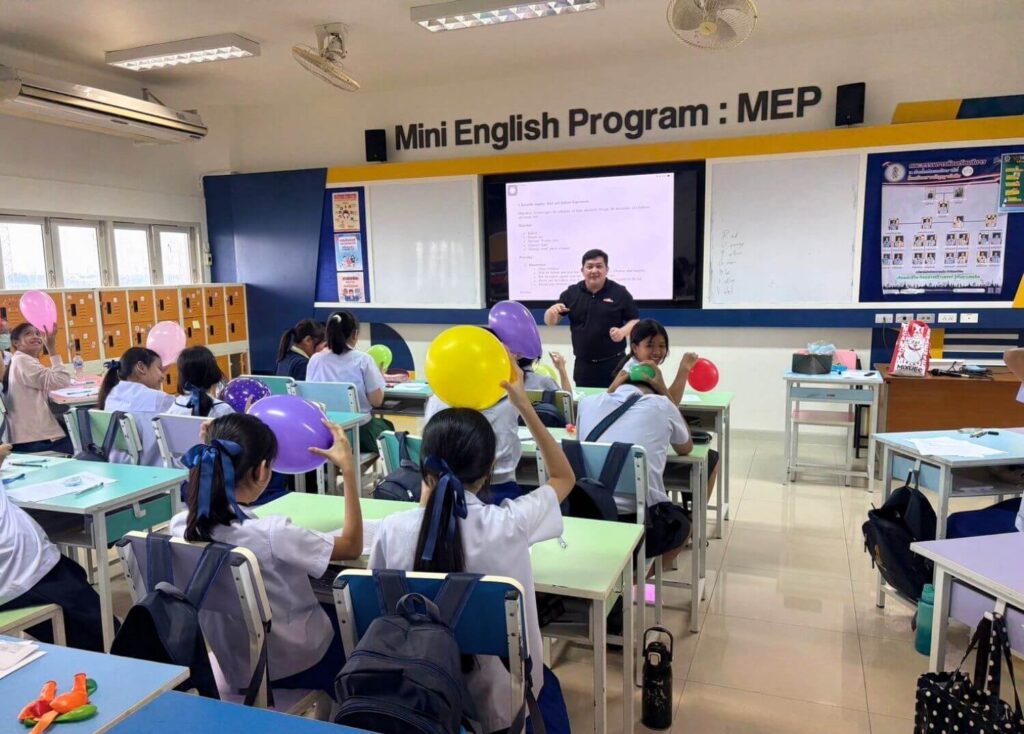
More than just learning theories, our BFITS Preparatory (Prep) Course in Science promotes curiosity, critical thinking, creativity, and problem-solving. Through practical activities and scientific investigations, students begin to realize that Science is not just a subject in the classroom. It is part of everyday life.
This is why the Prep Course is such an important starting point. Before students move into deeper Science topics, they first need to build confidence with observation, questioning, teamwork, lab safety, and hands-on learning. Activities such as the Science Probe or Balloon Experiment help students become more comfortable with scientific thinking in a fun and approachable way.
From the very beginning, the goal is not only to teach facts. It is to help students see Science as something they can explore, test, and understand for themselves.
Building Scientific Thinking from the Start
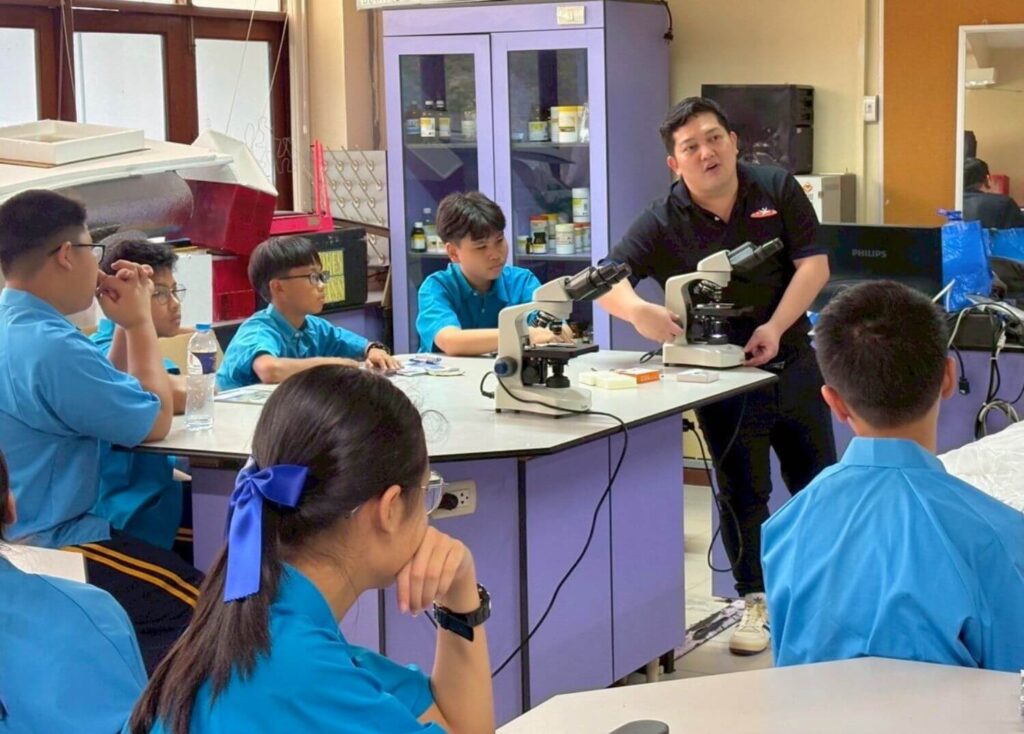
The Scientific Method is the heart of scientific discovery. Every scientific discovery starts with a question. Why do plants grow, or why does ice melt? Why can a ping-pong ball float in moving air? Scientists answer these questions using a process called the Scientific Method.
The scientific method is a step-by-step approach for solving problems and exploring natural events through evidence and testing. It helps students think logically and draw conclusions based on observations instead of guesses.
A. Observation Sparks Curiosity
The first step in the scientific method is observation. Scientists carefully watch events or patterns in nature. Students might notice that some plants grow faster than others or that dry ice creates fog when placed in water.
Observation sparks curiosity and encourages students to ask questions. It also helps them understand that Science often begins with something simple: noticing what is happening around them.
B. Questions Become Testable Ideas
The second step is asking a question. A good scientific question is specific and can be tested. For example, does sunlight affect plant growth? Why does dry ice produce fog? What keeps the ping-pong ball floating in the air?
After forming a question, students create a hypothesis, which is an educated guess based on prior knowledge. A hypothesis often follows an “If… then…” format. For example: “If mung bean plants receive more sunlight, then they will grow taller because sunlight helps plants produce food.”
C. Experiments Turn Ideas into Evidence
The next step is experimenting. During experiments, students test their hypothesis while carefully controlling variables. They observe changes, measure results, and collect data.
Scientific experiments teach students the importance of being precise, patient, and consistent. They also show students that strong conclusions come from evidence, not guesses.
D. Conclusions Help Students Reflect
After collecting data, students move on to analysis. They review their results, look for patterns, and decide whether their hypothesis was supported or rejected. Finally, students write a conclusion explaining what they learned from their investigation.
The scientific method teaches students valuable life skills beyond Science. It helps them develop critical thinking, decision-making, observation skills, and the ability to solve problems logically.
Exploring the Branches of Science
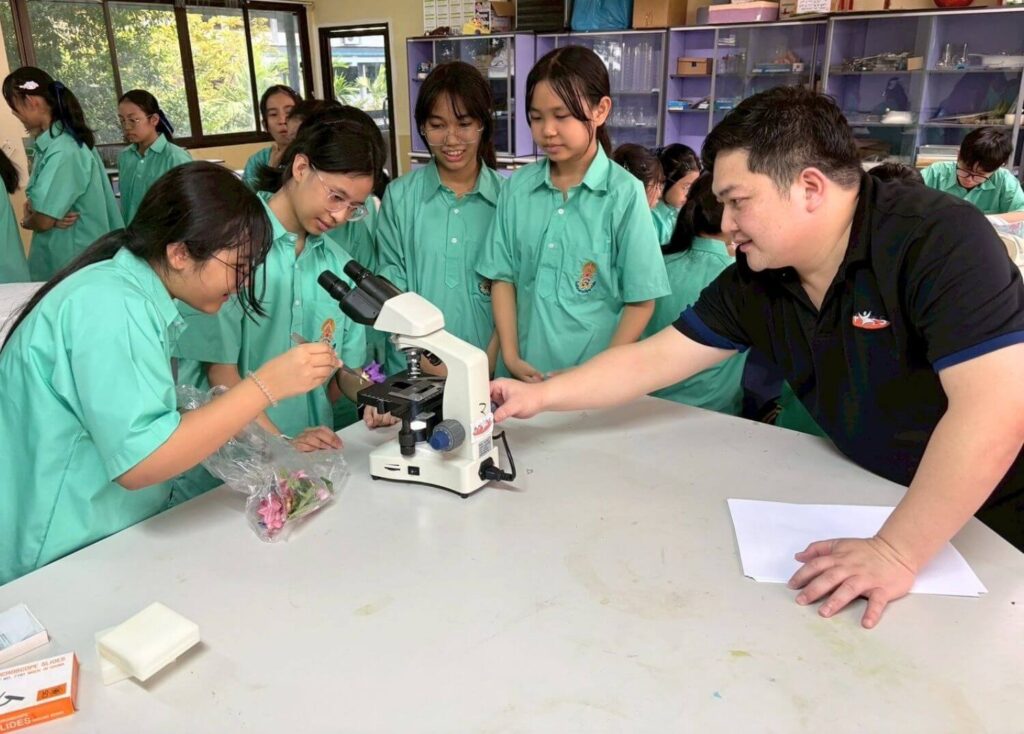
After students learn how scientists think, they can begin to understand the bigger science map. The Prep Course introduces them to different branches of Science and shows how each field connects to real life.
A. Life Science Studies Living Things
Life Science examines living things such as plants, animals, and microorganisms. The biology department is the largest part of life sciences. The Mung Bean Experiment falls within the Life Science field since students investigate how seeds germinate and develop under various situations.
Life Science enables students to understand plant development, human body systems, animal behavior, ecosystems, and living organisms. Through this branch, students begin to understand how life grows, adapts, and interacts with the environment.
B. Earth Science Explores Our Planet
Earth Science deals with the Earth and the space around it. It comprises geology, meteorology, oceanography, and astronomy. Students learn about volcanoes, earthquakes, climate, oceans, stars, and planets.
This branch helps students see that Science is not limited to the laboratory. It is also connected to the planet, the sky, and the natural systems around us.
C. Each Branch Connects to Real Life
By exploring the branches of Science, students begin to understand that Science is not just one subject. It is a way to explore the world.
Life Science helps explain living things. Earth Science helps explain the planet and space. Together, these branches help students connect classroom lessons to nature, daily life, and the questions they see around them.
Observing Growth Through Mung Beans
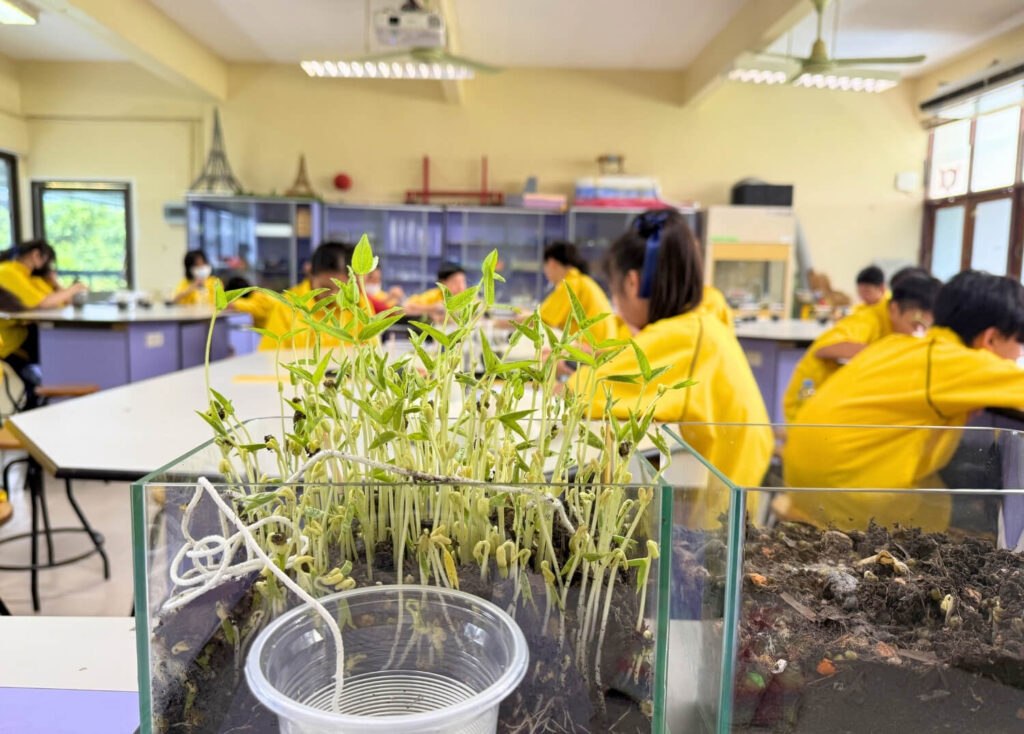
One of the best-known and highly effective experiments in our Science Prep Course classes is the Mung Bean Experiment. This practical exercise helps introduce students to plant biology and the process of conducting scientific observations.
A. Seeds Become a Science Investigation
The primary objective of the experiment is to explore how environmental conditions impact seed germination and plant growth. The required materials include mung bean seeds, cups or other containers, cotton, water, rulers, and labels.
Seeds are then placed in water-soaked cotton and exposed to different conditions, such as direct sunlight, indirect sunlight, and darkness. This simple setup gives students a clear way to observe how plants respond to their environment.
B. Students Track Growth and Changes
Each day, students give each seedling the same amount of water and record their observations. They take notes about the plant’s height and color.
After several days, students usually find some interesting distinctions. Seeds growing under the sun develop a bright green color. Plants in the dark turn pale. Roots grow downward, and shoots grow upward.
C. Patience Turns into Understanding
From this experiment, students learn about germination, the initial stage of plant growth after soaking in water. They also learn about photosynthesis, the process by which plants create food using energy from sunlight.
The experiment teaches patience, responsibility, observation skills, and basic knowledge of Life Science. It also shows students that even a small seed can become a meaningful scientific investigation when observed carefully over time.
Connecting Science and Engineering Challenges
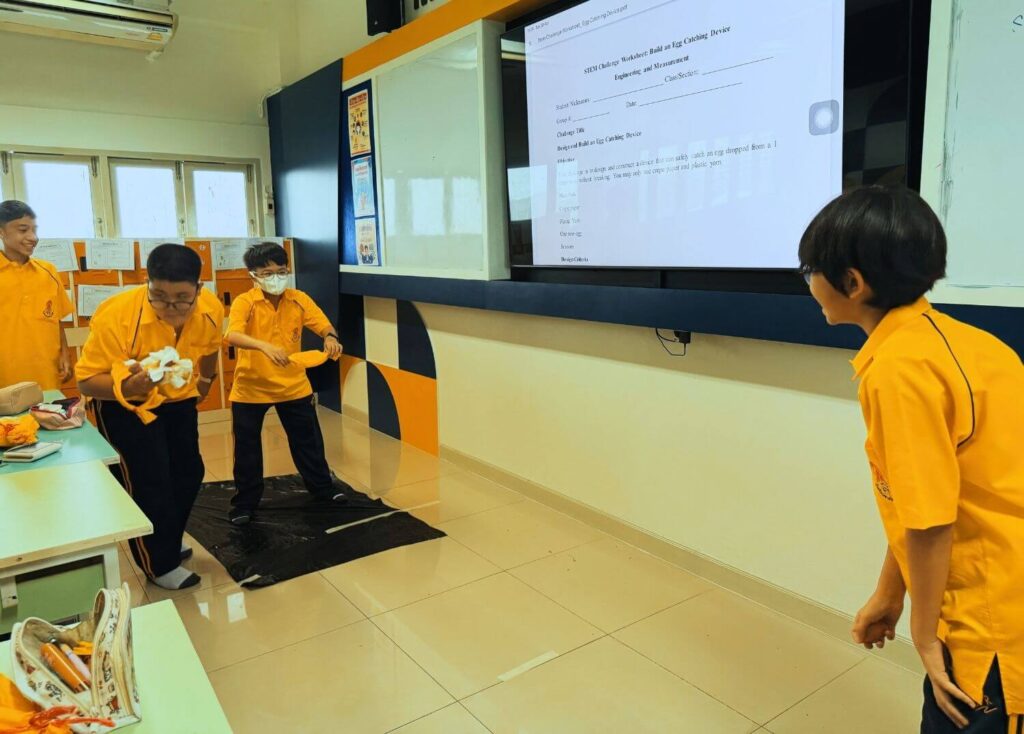
Once students understand how Science helps explain the world, they can also begin to see how Engineering helps solve problems. Science and Engineering are closely related disciplines that collaborate to enhance human welfare.
A. Science Asks Why Things Happen
Science is concerned with comprehending natural phenomena. Scientific questions include: “Why does this occur?” and “What is the cause of this reaction?”
Through Science, students learn to observe events, identify patterns, and understand the natural principles behind what they see.
B. Engineering Asks How to Improve
In contrast, Engineering applies scientific information to address real-world issues. Engineering questions include: “How can this be enhanced?” and “How can this issue be resolved?”
For instance, while Science explains the principles of air pressure, Engineering uses this information to develop aircraft. This connection helps students understand that scientific knowledge can be used to design practical solutions.
C. Students Build, Test, and Improve
Students must understand that Engineering uses a process known as the Engineering Design Process. It involves defining the problem, gathering information, generating ideas, constructing a model, testing the design, and enhancing the design.
Engineering activities promote creativity, collaboration, innovation, and critical thinking. Science uncovers knowledge, whereas Engineering applies that knowledge to develop inventions and technologies.
Activities such as the Egg Catcher challenge help students experience this connection more clearly. They are not only learning why something happens. They are also learning how to build, test, improve, and solve problems as a team.
Learning Laboratory Tools with Confidence
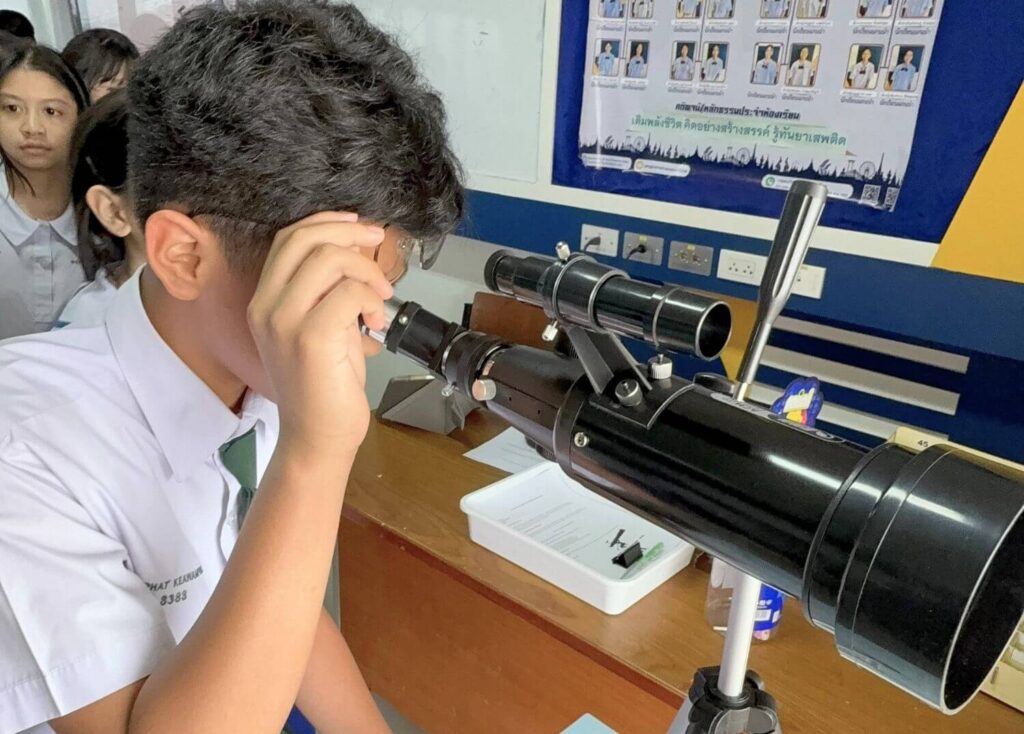
Learning the names and functions of laboratory apparatuses is vital when working in a laboratory. Before students can become confident in Science experiments, they need to understand the tools they use and how each one supports safe, organized laboratory work.
A. Tools Make Experiments Safer
Laboratory tools help students handle materials properly, measure accurately, observe closely, and complete experiments with better control. Knowing each tool also helps students become more responsible in the lab.
This practical knowledge is an important part of the Prep Course because it prepares students for more advanced Science activities in the future.
B. Each Apparatus Has a Purpose
A beaker is used to hold, mix, and heat liquids. A test tube is used in carrying out experiments and chemical reactions on a small scale. A graduated cylinder is used to measure the volume of liquids. An Erlenmeyer flask mixes liquids easily due to its narrow neck.
A Bunsen burner supplies heat for experiments. A thermometer measures temperatures in experiments. A dropper is used to transfer a small amount of liquid. A funnel facilitates the transfer of liquids to other containers. A stirring rod is used to mix substances.
A mortar and pestle crush solid substances into powder form. Wire gauze supports containers during heating in experiments. An evaporating dish is used to heat liquids to evaporate solvents. A microscope magnifies small organisms and objects in experiments. Forceps are used to carefully pick up small items. A balance measures the mass of substances.
C. Lab Familiarity Builds Independence
By learning these tools, students become more familiar with the laboratory environment. They begin to understand that each apparatus has a purpose and that careful use of materials is part of responsible Science learning.
This helps them build independence, confidence, and readiness for future Science classes.
Making Science Visible Through Experiments
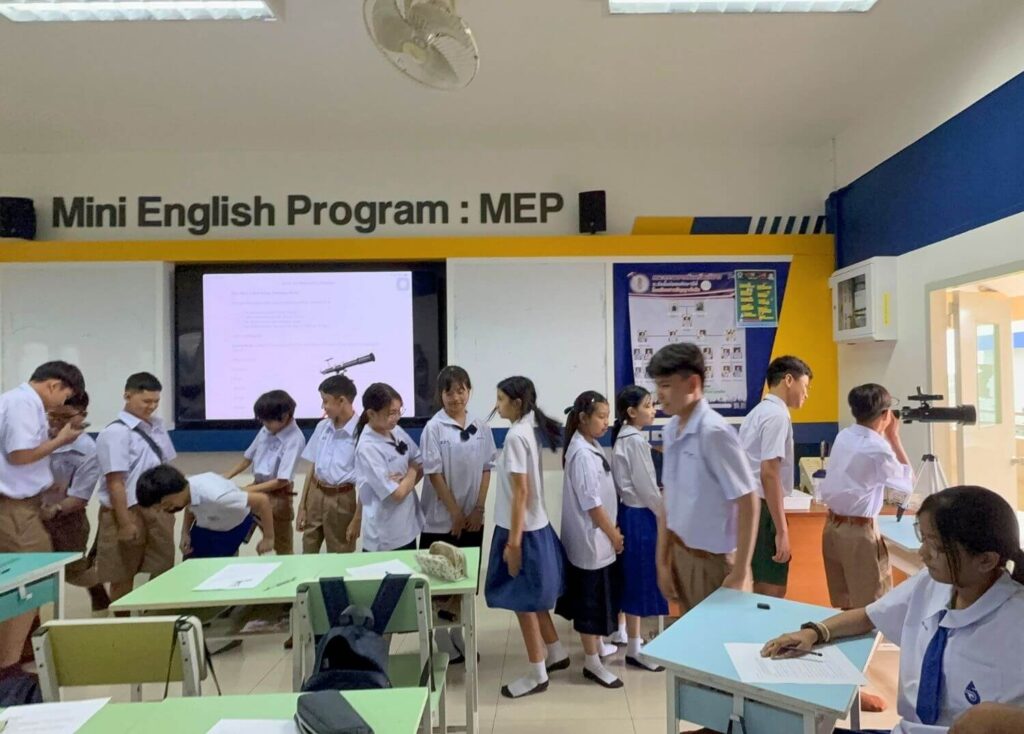
After learning scientific thinking, branches of Science, plant growth, Engineering, and lab tools, students are ready to see Science come alive through exciting demonstrations. These activities help students observe scientific principles that can sometimes feel difficult to understand through reading alone.
A. Reactions Show Energy in Action

The Gummy Bear Experiment is an incredibly engaging demonstration in the field of Chemistry. The experiment demonstrates that a chemical reaction can release energy.
In a controlled, teacher-led laboratory demonstration, students observe how a sugar-based material reacts with an oxygen-releasing chemical, producing strong, visible signs of energy. A gummy bear consists of sugar, which undergoes combustion or oxidation when reacting with oxygen.
During the reaction, several forms of energy are released, including heat and light energy, as well as carbon dioxide and water vapor. The experiment illustrates the presence of energy in food products. Additionally, it introduces students to essential Chemistry concepts such as chemical reactions, energy transformations, oxidation, and reaction rates.
Due to the strong reaction, the use of safety equipment is crucial for protection. This part of the lesson helps students understand that Science can be exciting, but it must always be handled with proper care, preparation, and supervision.
B. Dry Ice Reveals Sublimation
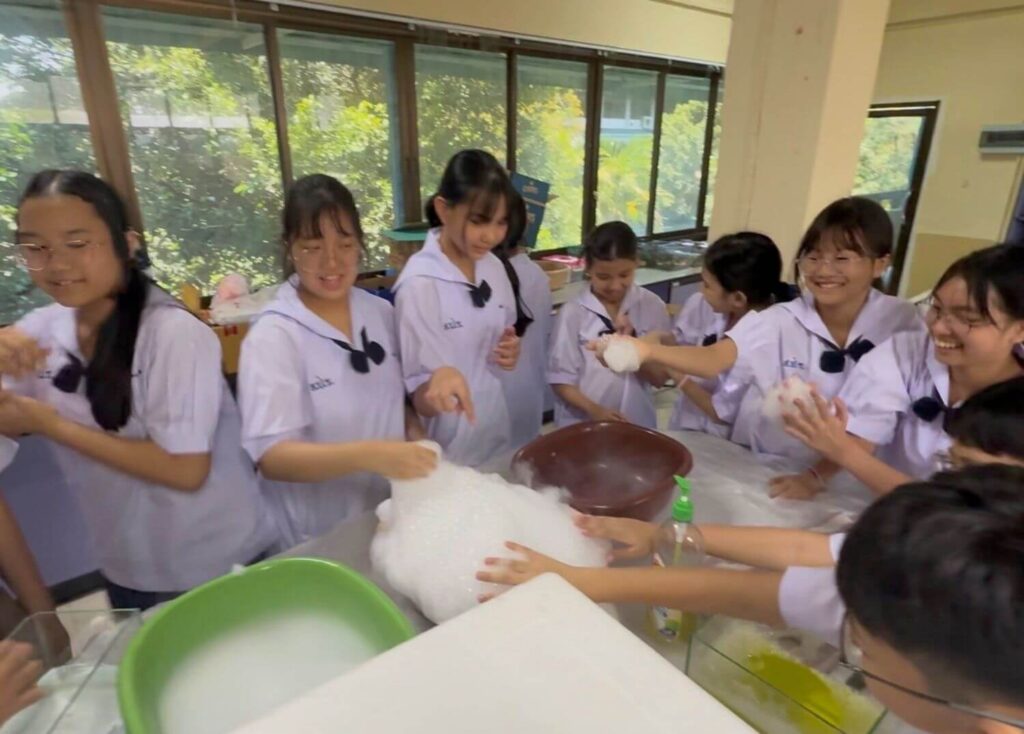
Dry ice is solid carbon dioxide. While regular ice melts to become liquid, dry ice sublimes. This means it transforms from its solid phase straight into a gas.
In the Dry Ice Experiment, a sample of dry ice is placed inside warm water, and the formation of thick fog is observed. Thick fog forms when water vapor in the air cools due to cold carbon dioxide gas. Observations made by the students include bubbling, fog formation, reduced dry ice, and cold temperatures.
The following scientific principles can be explained by this experiment: states of matter, sublimation, gas expansion, and temperature changes. Experiments with dry ice make for very exciting visual demonstrations of Physical Science concepts.
This activity is especially helpful because students can clearly see a concept that might otherwise feel abstract. Instead of only reading about sublimation, they observe it firsthand.
C. Airflow Explains Invisible Forces
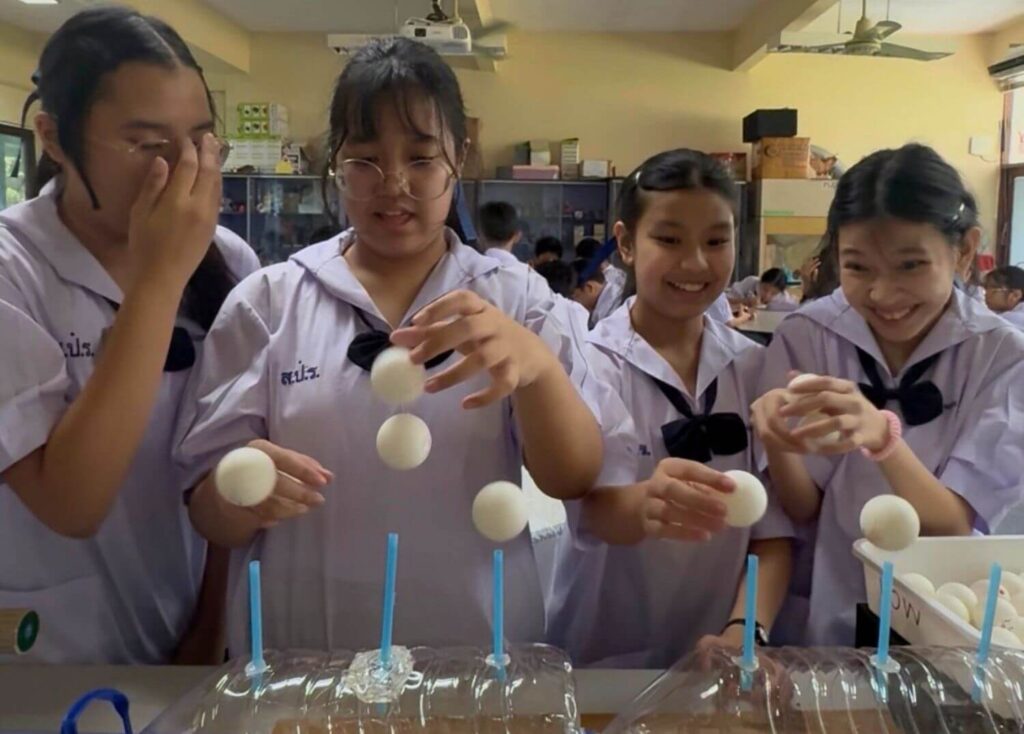
One of the amazing phenomena in Physics is the Floating Ping-Pong Ball Experiment, which shows Bernoulli’s Principle. In this experiment, students use moving air to observe how a ping-pong ball can remain in the flow of air. Amazingly, the ping-pong ball stays suspended in the air rather than falling to the ground.
According to Bernoulli’s Principle, faster-flowing air results in lower pressure than slower air. The moving air near the ball creates lower pressure, whereas higher-pressure air around the ball helps keep it within the airflow.
Key Physics concepts include air pressure, fluid flow, balanced forces, and aerodynamics. Some applications of Bernoulli’s Principle include how airplanes fly, how curveballs are thrown in games, and wind currents.
The floating ping-pong ball experiment enables students to see invisible forces at work. It makes Physics more engaging because students can watch air pressure and airflow affect an object in real time.
Sparking Scientific Passion Through BFITS Prep Course
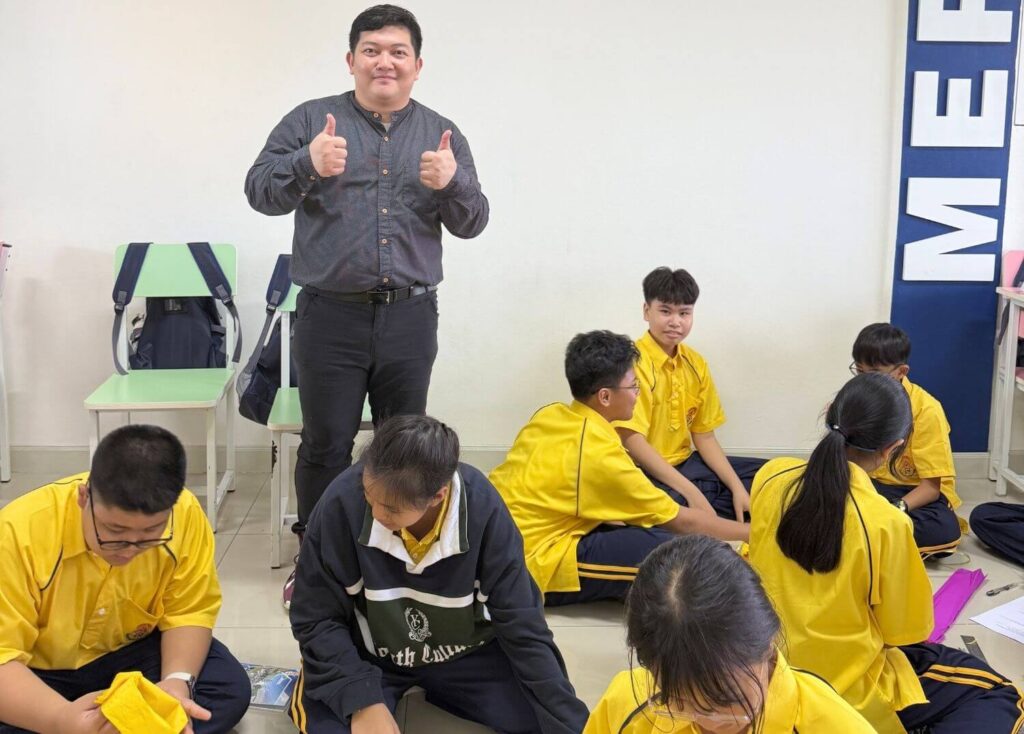
BFITS Prep Course in Science helps students lay the groundwork for future learning in the subject. Students are taught about topics such as the scientific process, various fields of Science, plant reproduction, Engineering, lab equipment, and fun experiments that demonstrate principles.
By performing activities such as the mung bean experiment, observing the gummy bear chemical reaction, using dry ice, and applying Bernoulli’s Principle, students can engage in Science and enjoy themselves while learning.
While Science does involve many calculations and laboratory tools, ultimately, Science is all about curiosity, exploration, and understanding of life. This preparatory course can ignite students’ passion for exploring Science and becoming future scientists, engineers, inventors, or innovators.
For anyone who wants to teach in Thailand, experiences like this show how valuable preparation can be. Through the BFITS Program, students are not only introduced to scientific concepts. They are encouraged to observe, question, experiment, and discover the wonders of Science for themselves.