STEM (Science, Technology, Engineering, and Mathematics) challenges are engaging, hands-on activities that encourage problem-solving, critical thinking, and creativity among students. These challenges provide real-world applications of scientific and mathematical principles while fostering teamwork and innovation. More importantly, they help students understand that learning is not only about memorizing concepts but also about applying ideas, testing solutions, and improving through experience.
“Nothing in life should be feared; it only needs to be understood,” said Marie Curie, a physicist and chemist who won two Nobel Prizes for her discoveries of radioactivity, radium, and polonium. This quote connects naturally to the heart of STEM education because it encourages students to face challenges with curiosity rather than fear. Through exploration, collaboration, and hands-on learning, they begin to understand how science and mathematics can solve real problems.
Racing, Launching, and Gliding to Innovation
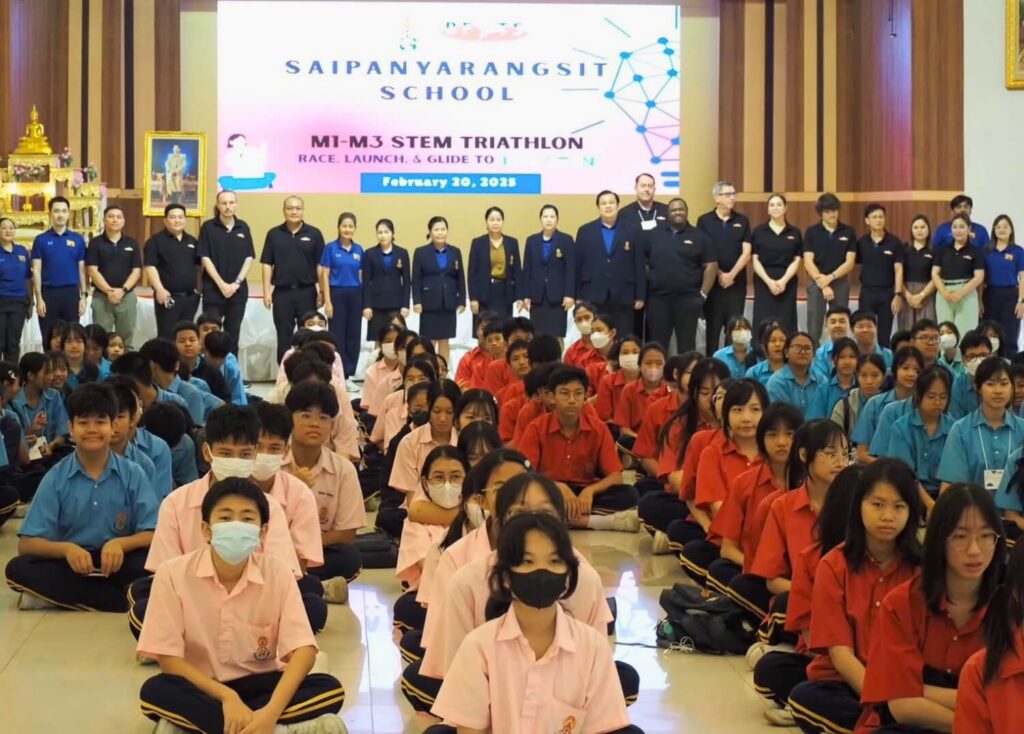
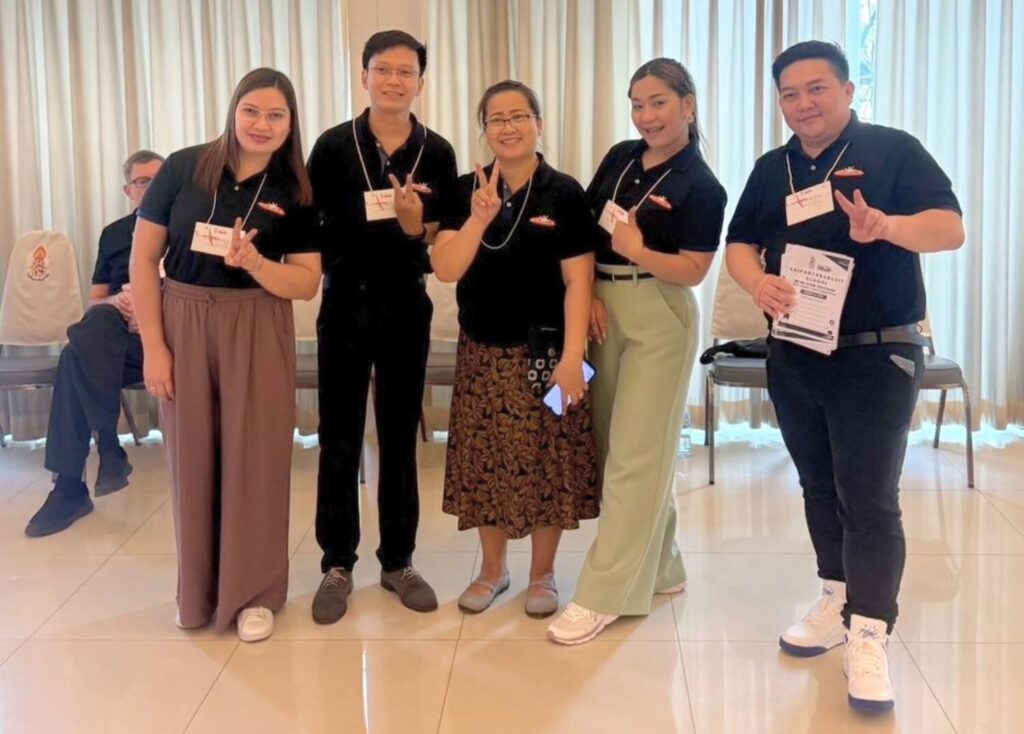
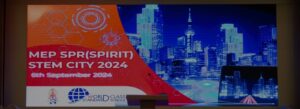
This academic year, Saipanyarangsit (SPR) School, in collaboration with BFITS Thailand, initiated the M1 – M3 STEM Triathlon: Race, Launch, and Glide to Innovation at the Saipanya Rangsit School Auditorium. The School Director, Khun Sumali Ramrit, attended and graced this event. The Mini English Program and the teachers of the Foreign Language Learning Essence Group organized the activity, with 179 MEP English class students actively participating.
This event served as a platform to showcase the potential for integrating Science, Technology, Engineering, and Mathematics (STEM) skills using the English language as a tool for learning. Through hands-on activities, students were encouraged to work as a team, develop leadership, be good followers, listen to feedback, think creatively, and present their ideas in various ways. Moreover, the outputs can be further developed for different stages at the local and international levels.
For those who teach in Thailand through the BFITS Program, events like this show how learning becomes more meaningful when students are challenged to think, build, test, and improve. In this blog, I will share with you how we race, launch, and glide to innovation.
STEM Challenges Build Future Skills
One of the primary benefits of STEM challenges is the development of problem-solving skills. These activities often present students with complex, open-ended problems that require logical reasoning and experimentation. For example, a common STEM challenge might involve designing a bridge using only paper and tape, requiring students to apply physics and engineering principles to construct a stable structure.
Through trial and error, students learn resilience and adaptability, which are essential skills in both academic and professional environments. For this event, the lower-level students participated actively in three different stations prepared by the teachers.
We divided the students into 30 groups, with the Blue, Green, and Yellow teams. All the teams will go around to the different stations to explore and create different outputs.
Station One: Distance Racer Challenge
Building Racers for Speed and Distance
In this station, the objective was for students to create a racer focused on both distance and speed. Each group could build up to two cars, with three members assigned per car. This structure helped ensure that all students had an active role in the process.
Learning from a Base Model
To begin, the Distance Racer team showed students a basic sample racer. This base model had several issues: it was slow, traveled only a short distance, and was difficult to wind. Two other designs were also shown, but their performance was not demonstrated. This gave students the chance to observe, identify problems, and think about how they could create a better version.
Testing and Improving the Design
The goal was for students to design a racer that could travel the full length of the ground floor, focusing first on distance and then on speed. After receiving their materials, each group tested their racer, made modifications, and improved their design through trial and error.
Racing, Scoring, and Reflection
For the competition proper, groups raced to see which car could travel the farthest. If racers reached the maximum distance, the winner was determined by which car reached that distance first. Round 1 included Groups 1–5 choosing their best car to compete, while Round 2 included Groups 6–10 choosing their best car to compete. Round 3 was the final round, where the winners from Rounds 1 and 2 competed against each other.
All students received 1 star for participation. The winners of Round 1 and Round 2 received an extra star, giving them 2 stars total. The winner of Round 3 received another star, bringing their total to 3.
Students also observed other cars and reflected on their work by answering questions such as: What are the 3 most important things that affect your car’s speed and distance? Why is each one important? After testing your racer, what changes would you make to improve it, and how would those changes help?
STEM Learning Through Trial and Error
Participating in the Distance Car Racer STEM Challenge was an exciting and enriching experience that combined creativity, problem-solving, and engineering principles. This challenge required designing, building, and testing a small car that could travel the greatest possible distance using limited materials. Throughout the process, students gained valuable insights into physics, teamwork, and the iterative nature of engineering design.
Station Two: Trebuchet Launch Challenge
Creating a Simple Launching Device
In this station, students created a simple slingshot-style device to launch water balloons at a target. The main goal was accuracy, with students aiming to hit the target as precisely as possible. A second distance category could also be added, giving students another way to test and improve their designs.
As part of the challenge, students also needed to consider the weight and size of the balloons and sand, helping them understand how small adjustments can affect the performance of their launcher.
Demonstration and Team Construction
The Trebuchet team provided a quick demonstration of how the trebuchet worked before students began building. Teams were then given 20–30 minutes to construct their launching devices based on the provided picture.
Targets were set up at different distances, each with a different point value. Once the devices were ready, teams took turns launching water balloons and trying to score as many points as possible.
Teacher Guidance and Scoring
Teachers each supervised 2–3 groups, making sure students followed directions and properly constructed their trebuchets. When it was time to launch, teachers also helped students aim for the buckets.
Each ball that landed in a bucket counted as one point for that team. Students were also responsible for tracking how many successful shots they made. If a ball bounced on the ground but still made it into the bucket, it still counted toward the team’s overall score.
Winning, Tiebreakers, and Adjustments
The team with the most points at the end won the challenge. If there was a tie between two groups, the tiebreaker was one final shot to see whose projectile could travel the farthest.
If students struggled to get any balls into the buckets, one student could be elected to stand in the line of fire, hold a bucket at a safe distance, and try to catch the balls as they were launched. This could only be done with close supervision and at the teacher’s discretion.
Station Three: Glider Design Challenge
Designing for Distance and Accuracy
The last station, my station, is the Glider Station. The objective of this station is for students to create a glider that achieves the longest flight distance and the most accurate landing. The minimum length should be at least 20 inches, and each group must build one glider.
Building, Testing, and Modifying Gliders
The facilitators will introduce the challenge, provide simple instructions, outline parameters, and run a stress test to assess distance and accuracy. Students will collect their materials, build their glider, test it, and make modifications to improve their design.
Launching and Scoring the Competition
The competition proper is that one member from each group will launch the glider. Groups will race each other to see which glider goes farthest and closest to the target. If gliders reach the maximum distance, then whoever hits closest to the target wins.
Round 1 includes Groups 1–5, while Round 2 includes Groups 6–10. Round 3 is where the winners from Rounds 1 and 2 compete. All students will receive 1 star for participation. The winners of Round 1 and Round 2 will each receive an extra star, giving them 2 stars total. The winner of Round 3 will receive an extra star, bringing their total to 3 stars.
Breakdown: 8 Groups – 1 Star; 1 Group – 2 Stars; 1 Group – 3 Stars.
Reflecting on Glider Performance
Students observe other gliders and reflect on their papers with the following questions they have to ponder and reflect on:
- What are the 3 most important things, such as shapes and designs, that you think affect your glider’s flight distance and accuracy? Explain why each one is important.
- After testing your glider, what changes would you make to make it better? Explain how these changes would help.
Learning Through Aerodynamics and Teamwork
Participating in the Glider STEM Challenge was an exciting and enriching experience that combined creativity, problem-solving, and engineering principles. This challenge required designing, building, and testing a small glider capable of achieving the greatest possible flight distance using limited materials.
Throughout the process, I gained valuable insights into aerodynamics, teamwork, and the iterative nature of engineering design.
Hands-On Learning for Brighter Futures
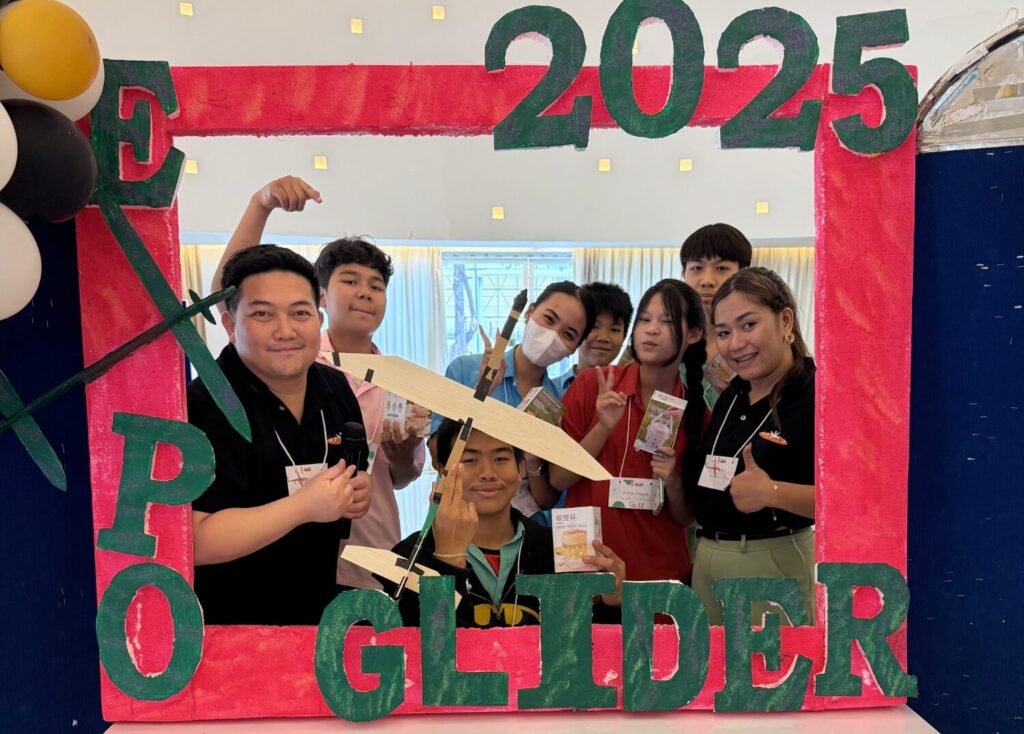
Incorporating STEM challenges into education is essential for fostering a generation of innovative thinkers and problem solvers. These activities not only enhance academic learning but also develop critical life skills such as teamwork, creativity, and perseverance.
By encouraging hands-on exploration and real-world problem-solving, STEM challenges prepare students for the challenges and opportunities of the future. With this initiative event, M1 – M3 STEM Triathlon: Race, Launch, and Glide to Innovation, we can help the students to prepare for their brighter future.
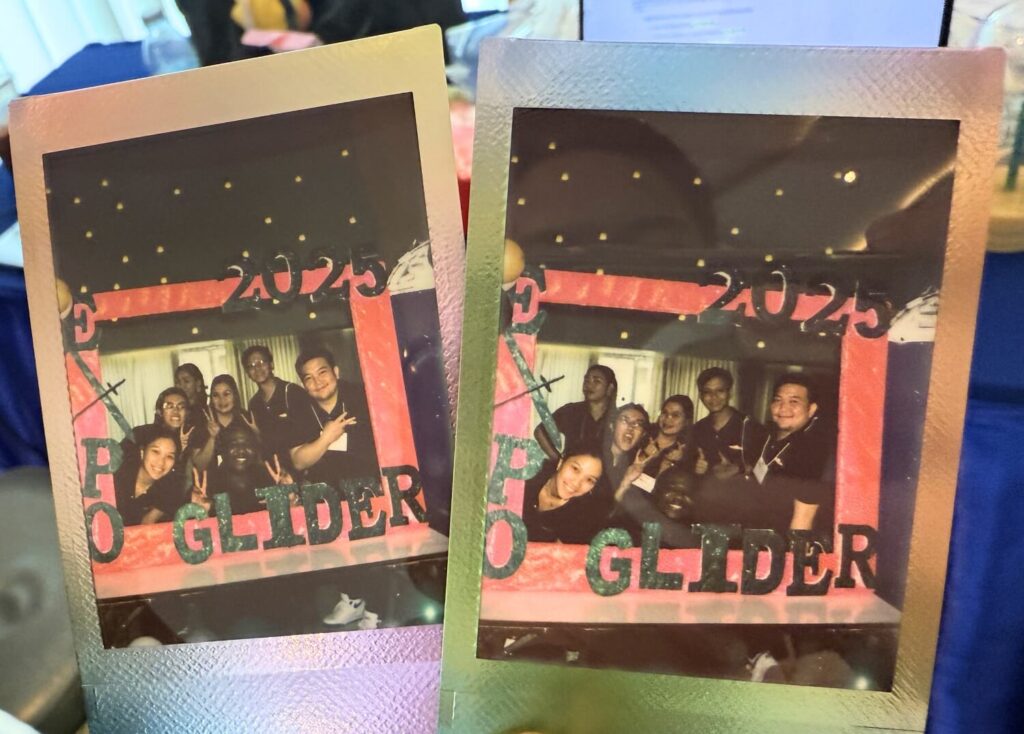
For teachers in Thailand, moments like this show how students can grow when they are given space to experiment, collaborate, and present their ideas with confidence. It is also a reminder that teaching in Thailand through the BFITS Program can involve meaningful learning experiences that go beyond the usual classroom routine.







![[BFITS] BrightMinds Series_The Future is Yours KickOff Session on Expert Insights for Your Future Career with Mr. Suthichai Yoon](https://bfitsthailand.com/wp-content/uploads/2025/01/BFITS-BrightMinds-Series_The-Future-is-Yours-KickOff-Session-on-Expert-Insights-for-Your-Future-Career-with-Mr.-Suthichai-Yoon-300x109.jpg)