The landscape of modern education is shifting from traditional rote learning to immersive, hands-on, collaborative experiences. This change is clearly evident in the Student Playtime and Race (SPR), particularly during the recent Lower-Level Expo.
Designed as part of the SPR GEN(ius) Z Smart Camp and Expo in Saipanyarangsit (SPR) School, this event blended academic rigour with gamified learning, allowing younger students to engage meaningfully through a series of structured “rounds” that tested their skills in Computer Science, English, Mathematics, and Science.
In this blog, I would like to share the fun activities and meaningful moments from the day, along with my personal experience serving as one of the emcees. Beyond the competitions themselves, this English camp-style expo highlighted how experiential learning, teamwork, and laughter can work together to build student confidence while strengthening collaboration among teachers within a BFITS partner school.
The Architecture of Engagement: Opening Ceremonies That Set the Tone

The event officially began at 08:10 with a lively Opening Ceremony led by SPR BFITS Program Teachers Ada Mangaoang and me. The descriptors chosen for the day—Spectacular, Fun-filled, Interactive, and Breathtaking—immediately set an upbeat and welcoming tone. For younger learners, lowering the affective filter—the emotional factors that influence learning—is essential to encouraging participation and reducing anxiety.
Being an emcee is a unique exercise in controlled chaos. While the audience sees a polished presentation, the reality behind the microphone is a constant balancing act between the script and the unexpected. Over time, I have learned that an emcee’s primary role is not to be the focus but to serve as a bridge connecting the audience, the program, and the room’s overall energy.
Every crowd is different. Some need warmth and humour to loosen up, while others require structure and pace to stay focused. Live events rarely go exactly as planned. Teleprompter failures, missing participants, and unexpected technical issues become moments that demand quick thinking.
These experiences taught me the art of ad-libbing—keeping a mental toolkit of stories, observations, and light humour to maintain momentum. By the end of the day, switching off the microphone brings a deep sense of satisfaction, knowing that for several hours, I helped hold the experience together for students, teachers, and staff alike.
Leadership Presence and Institutional Support
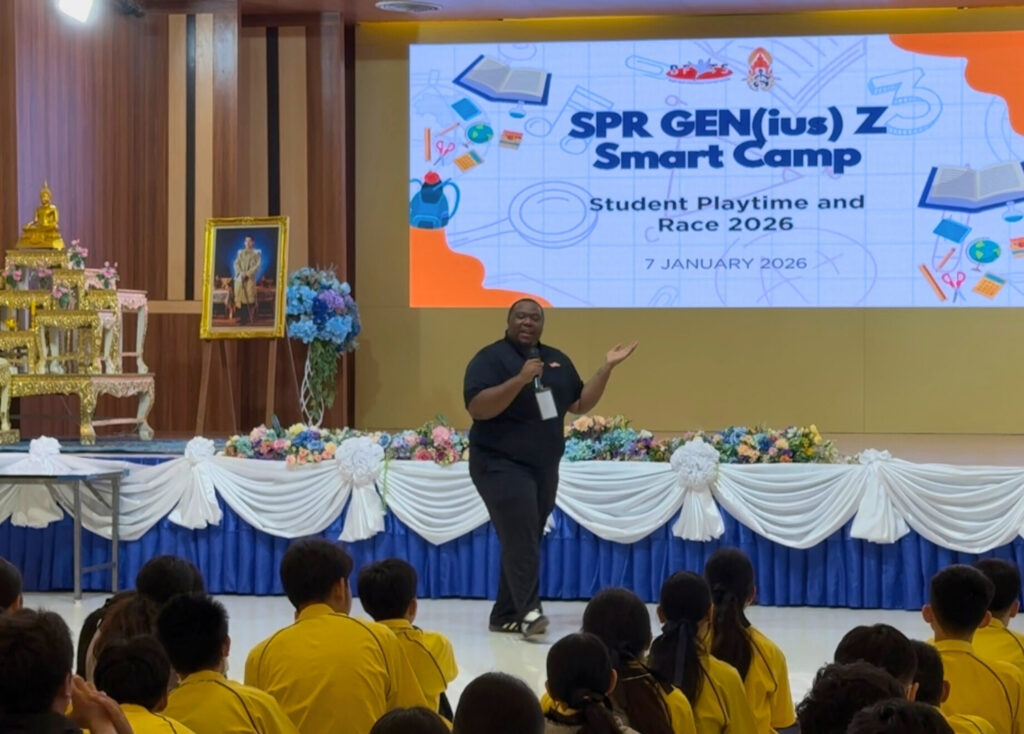
Adding further weight to the opening, Mr. Trell Cornelius, one of the BFITS Program Managers, delivered welcoming remarks that grounded the event in the school’s broader educational vision. His message served two important purposes:
- Inspiration: Connecting the day’s activities to long-term learning goals
- Validation: Reinforcing that student “play” is meaningful and academically valuable
When school leadership actively supports initiatives like the SPR GEN(ius) Z Smart Camp and Expo, students gain confidence knowing their efforts are recognized and taken seriously. This visible support reinforces the importance of English communication, teamwork, and active learning within the school community.
Dynamic Grouping and the Icebreaker Philosophy
Following the opening ceremony, the program transitioned into Student Grouping (08:25–08:40) and Icebreaker Activities (08:40–08:55). In competitive academic environments, students can feel pressure before activities even begin. These sessions were designed to address social and emotional readiness, helping students feel comfortable before entering the academic rounds.
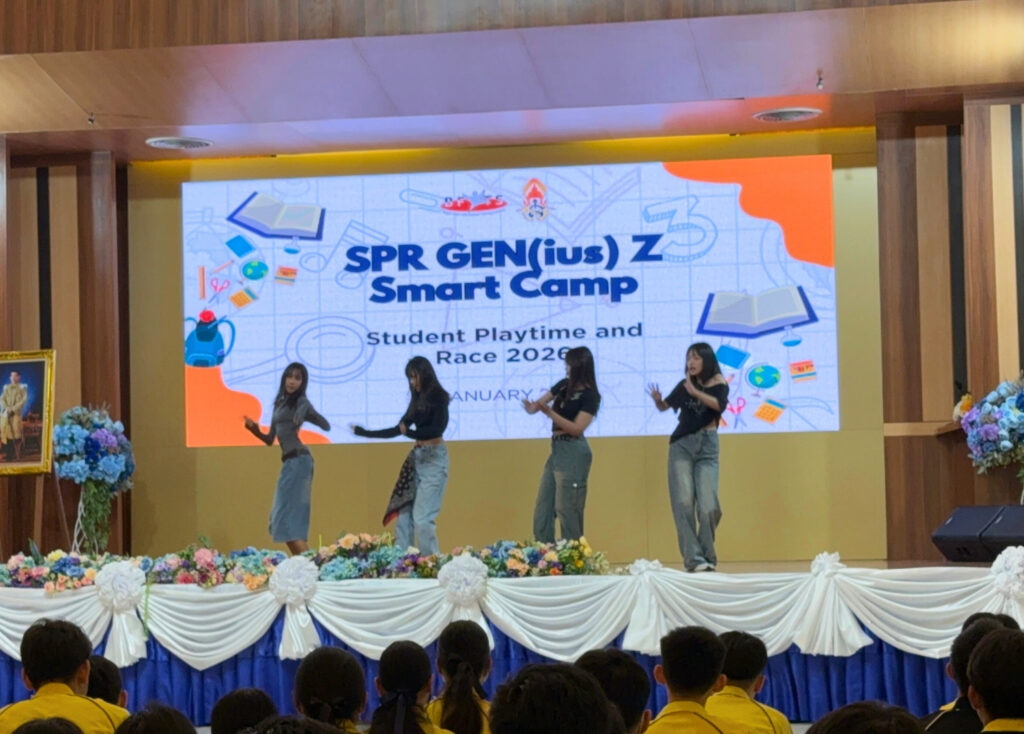
An intermission performance by Mini English Program (MEP) students provided an opportunity for peer modelling, demonstrating what confidence and consistent practice can achieve. This was followed by a high-energy Just Dance segment featuring familiar songs like Waka Waka and Gangnam Style.
Beyond entertainment, these activities served a cognitive purpose. Research shows that physical movement increases blood flow to the brain, improving flexibility, focus, and problem-solving skills, which are essential for the rounds that follow.
The Academic Circuit: Rounds 1 Through 4

The core of the camp and expo was its rotation-based academic competition. With 36 student groups participating, careful logistical planning ensured a smooth experience. Each round lasted 65 minutes, long enough for focused engagement while maintaining excitement and momentum.
Station Breakdown:
- Computer (Groups 1–9): Digital literacy, logic, basic coding, and hardware identification
- English (Groups 10–18): Communication skills, vocabulary development, and team storytelling
- Math (Groups 19–27): Mental math, quantitative reasoning, and geometry challenges
- Science (Groups 28–36): Observation, experimentation, and scientific thinking
By rotating through each station, every student experienced all subject areas. This structure prevented subject fatigue and encouraged curiosity as students transitioned between different learning environments, such as the computer room and science stations.
Pacing, Breaks, and Student Well-Being
A common challenge in large educational expos is overscheduling. Our camp and expo avoided this by building in purposeful breaks throughout the day:
- 10:00–10:15: Morning snack after the intensity of Round 1
- 11:20–12:20: A full lunch break for rest and social interaction
- 14:30–14:45: A final “brain fuel” break while judges finalized results
This schedule acknowledged the attention limits of younger learners. Referring to snacks as “brain fuel” emphasized that rest and nourishment are part of effective learning strategies, not distractions from them.
The Grand Finale: Recognition, Reflection, and Teamwork

The day concluded with a formal Closing Ceremony at 14:45, mirroring the structure of the opening. Another MEP student performance allowed time for reflection while final scores were prepared. Recognizing winning teams reinforced healthy competition and rewarded communication, collaboration, and effort.
Closing remarks by Ms. Nut Nutnaree, Operations Manager, highlighted the behind-the-scenes coordination required to manage an event involving dozens of teams, teachers, and departments. Acknowledging operational efforts reminded everyone that successful learning experiences depend on strong teamwork across all roles.
Final Reflections: Learning as an Exciting Shared Adventure

The SPR GEN(ius) Z Smart Camp and Expo demonstrated the value of integrated, experiential learning within a BFITS partner school. By transforming a regular school day into a competitive “race,” abstract concepts in English, Math, and Science became meaningful challenges that students could actively engage with.
The success of the event relied on three key elements:
- Clear communication: Emcees and facilitators maintained clarity and energy
- Structured flexibility: The 65-minute rotations balanced learning and play
- Strong collaboration: Program leadership, operations staff, and Thai teachers worked seamlessly together
As students departed at 15:00, they carried more than certificates or snacks. They left with a stronger understanding that education is not passive. It is collaborative, dynamic, and built through shared effort.
Events like this remind us that learning thrives when it is joyful, challenging, and grounded in connection—turning education into an exciting adventure worth remembering.







![[BFITS] Be Like Millie_Sharing My Essential Tips as an English Teacher Expat in Thailand](https://bfitsthailand.com/wp-content/uploads/2025/03/BFITS-Be-Like-Millie_Sharing-My-Essential-Tips-as-an-English-Teacher-Expat-in-Thailand-300x109.jpg)