The Terrarium Ecosystem Project is a hands-on biology activity that helps students understand matter cycling, energy flow, and ecosystem balance. In this supervised classroom or laboratory project, students build a small self-contained ecosystem using soil, plants, water, and natural materials. It is a creative way to make ecology, sustainability, and the water cycle easier to observe and understand.
📘 Overview
Terrariums are small, self-contained ecosystems that allow students to recreate and observe natural environments in a classroom or laboratory setting. By building one, students can observe how biotic factors, such as plants, interact with abiotic factors, such as soil, water, rocks, and sunlight. This makes the project a useful way to connect the chapter on matter and energy in the environment to real, observable changes.
This activity also helps students visualize the water cycle. Water inside the terrarium can evaporate, condense on the container walls, and return to the soil, similar to rainfall. Through observation, students can connect evaporation, condensation, precipitation, photosynthesis, respiration, and nutrient cycling to one living system.
🎯 Learning Objective
- Students will build a terrarium as a model ecosystem.
- Students will identify biotic and abiotic components in a terrarium.
- Students will explain how matter cycles within a self-contained ecosystem.
- Students will describe how energy flows from sunlight to plants.
- Students will observe the water cycle through evaporation, condensation, and precipitation.
- Students will practice scientific observation, environmental responsibility, and collaboration.
🧪 Materials
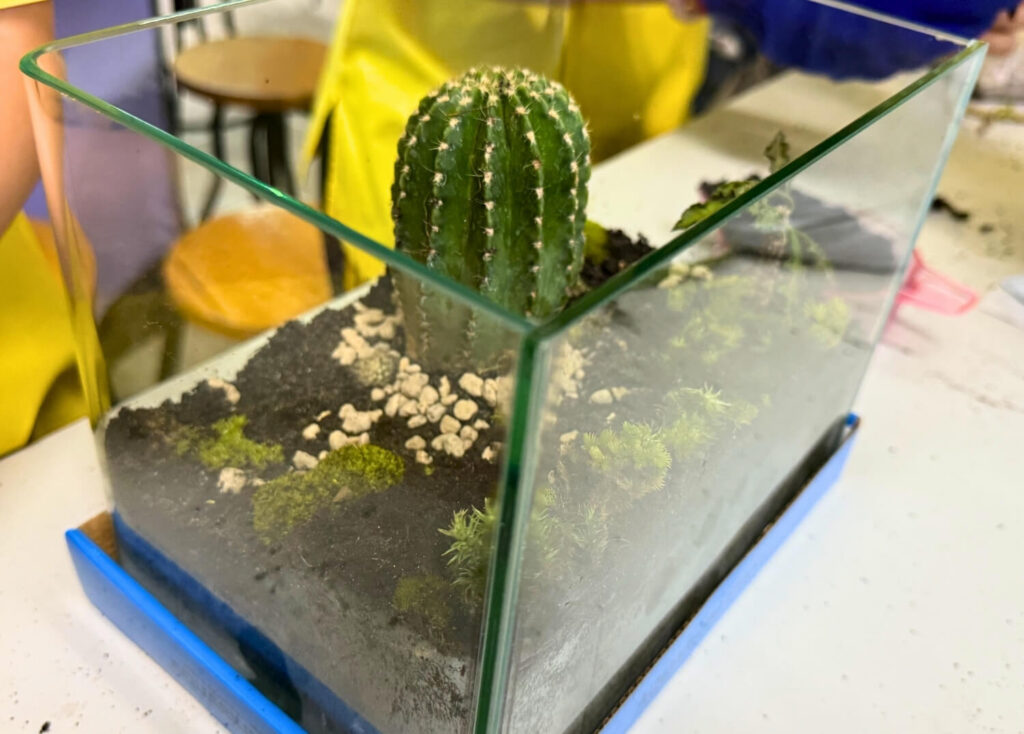
- Clear glass or plastic container with a lid
- Serves as the terrarium container, such as a mason jar or plastic box.
- Serves as the terrarium container, such as a mason jar or plastic box.
- Small rocks or pebbles
- Used as the bottom drainage layer.
- Used as the bottom drainage layer.
- Activated charcoal
- Helps filter water and reduce odors.
- Helps filter water and reduce odors.
- Potting soil
- Provides nutrients and support for the plants.
- Provides nutrients and support for the plants.
- Small plants
- Examples include mosses, ferns, or small tropical plants.
- Examples include mosses, ferns, or small tropical plants.
- Decorative items (optional)
- Small figurines, stones, or other design elements may be added.
- Small figurines, stones, or other design elements may be added.
- Water
- Supports plant growth and helps demonstrate the water cycle.
- Supports plant growth and helps demonstrate the water cycle.
- Spray bottle
- Used to lightly water the terrarium without overwatering.
- Used to lightly water the terrarium without overwatering.
- Small insects (optional and teacher-approved only)
- Students may bring insects such as crickets, but this should remain optional and handled responsibly to protect living organisms and the environment.
📝 Procedure
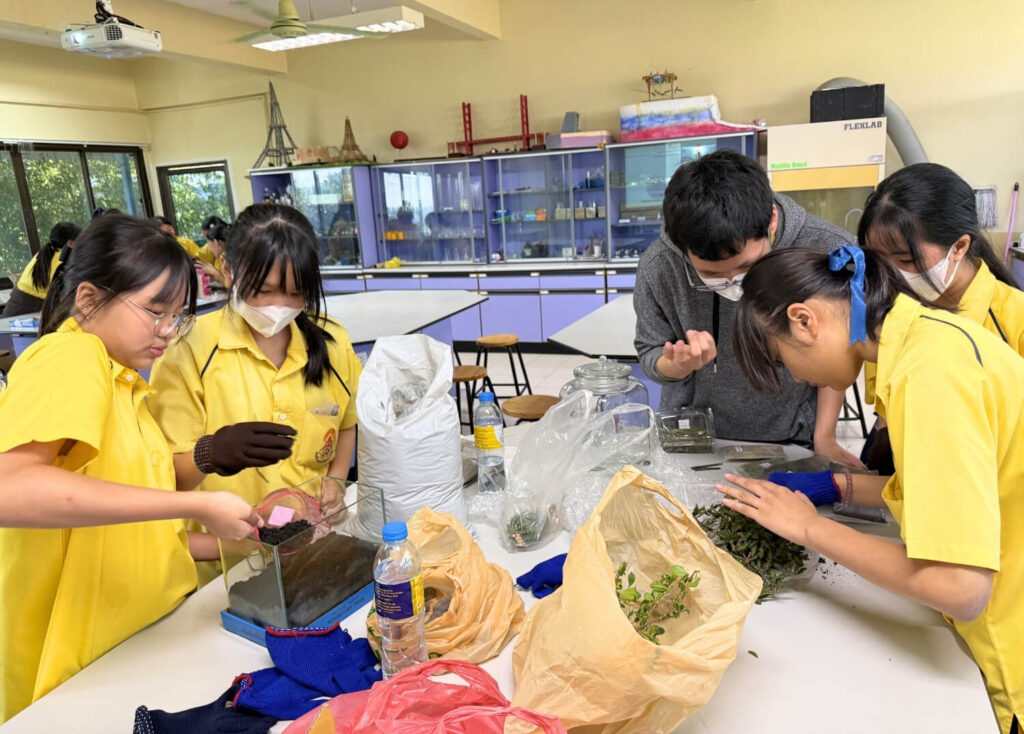
- Begin with a pre-lab activity where students collect suitable terrarium materials from approved areas around the campus.
- Divide students into small groups to encourage collaboration and shared responsibility.
- Remind students to collect only small amounts of materials that are plentiful and will not harm the environment.
- Ask students to record where each collected material was found and describe its condition, such as dry, wet, or abundant.
- Prepare a clear glass or plastic container with a lid.
- Add about 1 inch of small rocks or pebbles to the bottom of the container for drainage.
- Sprinkle a thin layer of activated charcoal over the rocks to help filter water and prevent odors.
- Add 2–3 inches of potting soil on top of the charcoal.
- Make small holes in the soil and carefully place the plants inside the terrarium.
- Cover the plant roots properly with soil.
- Add optional decorative materials if desired.
- Lightly spray water into the terrarium, making sure the soil is moist but not soggy.
- Seal the terrarium with a lid. If the container has no lid, cover it with clear plastic wrap.
- Place the terrarium in an area with indirect sunlight to avoid overheating while still supporting photosynthesis.
- Observe the terrarium over several days and weeks, recording changes in moisture, condensation, plant growth, and ecosystem balance.
👀 Expected Observations
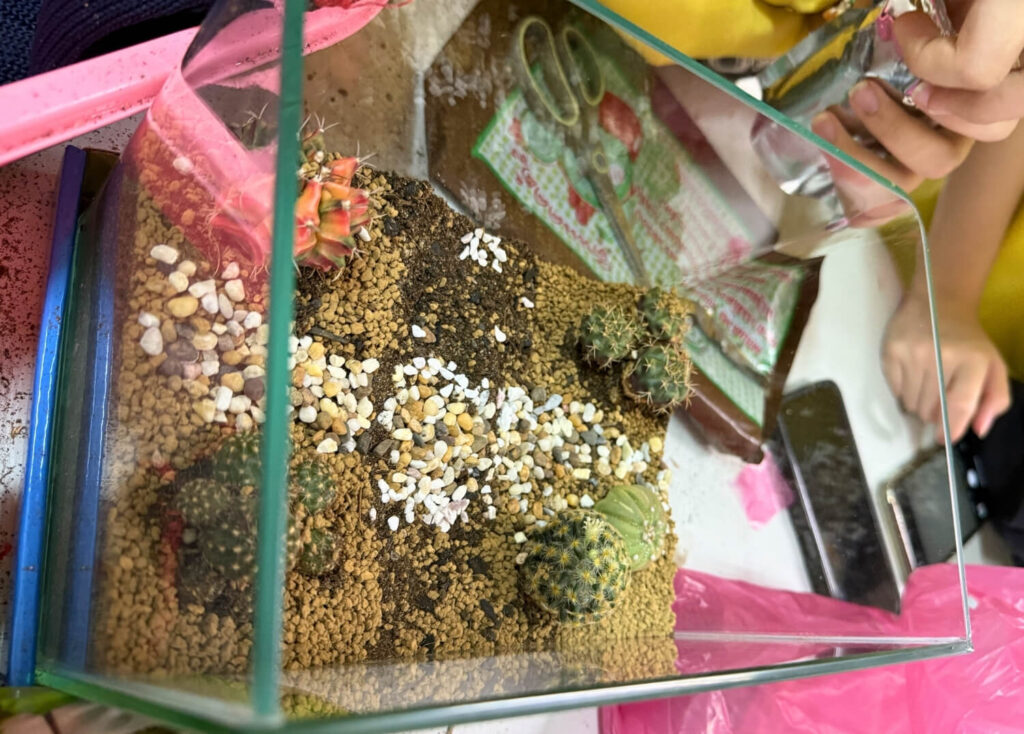
Students may observe:
- Moisture forming inside the container
- Condensation appearing on the container walls
- Water returning to the soil after condensation
- Plants adjusting to the enclosed environment
- Visible changes in plant growth over time
- Soil moisture changing across several days
- A balance between living and non-living components
- Differences between terrariums depending on light exposure, plant type, or whether the system is open or closed
🧠 What’s Happening?
A terrarium works as a miniature ecosystem. The plants, soil, water, air, rocks, and light all interact with one another. Water added to the terrarium can evaporate, condense on the container walls, and return to the soil. This helps students see how the water cycle works in a small, visible system.
The terrarium also shows how matter cycles and energy flows. Nutrients can move through soil, organic matter, and plants. Sunlight provides energy for photosynthesis, allowing plants to produce glucose and oxygen. This demonstrates how ecosystems depend on the relationship between biotic and abiotic factors to remain balanced and sustainable.
🌟 Learning Outcomes
Students can learn several important concepts and skills through this project:
- Ecosystem Structure
- Students identify living and non-living parts of an ecosystem.
- Students identify living and non-living parts of an ecosystem.
- Water Cycle
- Students observe evaporation, condensation, and precipitation inside the terrarium.
- Students observe evaporation, condensation, and precipitation inside the terrarium.
- Matter Cycling
- Students understand how water and nutrients move through the system.
- Students understand how water and nutrients move through the system.
- Energy Flow
- Students explain how sunlight supports photosynthesis and plant growth.
- Students explain how sunlight supports photosynthesis and plant growth.
- Sustainability
- Students see how limited resources can be reused in a balanced system.
- Students see how limited resources can be reused in a balanced system.
- Environmental Awareness
- Students learn why it is important to protect organisms and collect materials responsibly.
- Students learn why it is important to protect organisms and collect materials responsibly.
- Scientific Inquiry
- Students observe changes, record data, compare results, and reflect on ecosystem conditions.
- Students observe changes, record data, compare results, and reflect on ecosystem conditions.
- Creativity and Collaboration
- Students design their terrarium while working together to build and maintain it.
🎓 Classroom Notes
- This project works best as a supervised group activity with a pre-lab material collection stage.
- It is especially effective for lessons on ecosystems, matter and energy, sustainability, and the water cycle.
- The strongest teaching value comes from long-term observation, not just building the terrarium.
- Students should be guided to collect natural materials responsibly and avoid harming living organisms.
- The activity combines science, creativity, teamwork, and environmental awareness in one project.
💬 Discussion Questions
- What are the biotic components in the terrarium?
- What are the abiotic components in the terrarium?
- How does water move inside the terrarium?
- What evidence of condensation can students observe?
- How does sunlight support the terrarium ecosystem?
- Why is it important not to overwater the terrarium?
- How do plants help maintain balance inside the terrarium?
- What might happen if one part of the system is removed or changed?
- How does a terrarium model sustainability?
- Why is it important to collect materials responsibly from the environment?
🚀 Extension / Challenge
- Compare an open terrarium and a closed terrarium.
- Test how different light conditions affect plant growth.
- Compare terrariums with different types of plants.
- Record short-term observations from Day 1 to Day 3.
- Record long-term observations after Week 1 and beyond.
- Create a diagram showing the water cycle inside the terrarium.
- Explain how matter cycles through the terrarium system.
- Research how terrariums relate to Earth’s larger ecosystems.
- Design a sustainability poster based on the terrarium project.
- Reflect on how this project helps students appreciate natural resources.
⚠️ Safety Note
This project should be carried out in a controlled classroom or laboratory setting under teacher supervision. Students should wear gloves when handling soil, plants, or natural materials, collect only from teacher-approved areas, and avoid harming animals or uprooting large plants. Any insects or living organisms should only be included with teacher approval and handled responsibly.
📂 Media & Resources
For downloadable files and complete teaching resources, visit our Download Center.