Graduation in Thailand is a significant milestone that marks years of hard work, dedication, and personal growth. For a teacher in Thailand, witnessing this moment offers a meaningful glimpse into the culture and values surrounding education. Unlike in many countries where ceremonies are relatively simple, Thai graduation is a meaningful cultural experience that combines academic achievement, family pride, and national traditions.
For those of us teaching in Thailand through the BFITS Program, moments like these reveal just how deeply education shapes not only students but also the people around them. Thai graduation ceremonies are known for their formal structure, strict dress codes, royal traditions, and lively celebrations with friends and relatives. More than just receiving a diploma, it is a public recognition of a student’s journey from education to adulthood.
For many Thai students, graduation is one of the most important days of their lives. As a proud BFITS teacher in Thailand, I had the privilege of witnessing this milestone with my students, and the experience deepened my appreciation of the meaning behind Thai graduation traditions.
A Milestone That Reflects Family Pride
Education holds an important place in Thai society, and earning a degree represents years of commitment not only from students but also from their families. Many parents work hard and make sacrifices to support their children’s education, so graduation becomes a moment that reflects those shared efforts.
When students graduate, the pride felt by parents and relatives is unmistakable. What might seem like an academic ceremony quickly turns into a family celebration filled with smiles, photos, and heartfelt congratulations.
In many ways, graduation is seen as a sign of progress and opportunity. Families often believe that higher education can open doors to better careers and improved quality of life. Because of this, graduation ceremonies bring together relatives and friends who gather to celebrate the graduate’s achievement and capture the moment through photographs.
Gratitude and Respect in Thai Graduation Traditions

One of the most meaningful parts of Thai graduation is the emphasis on gratitude. The ceremony is not only about receiving a diploma but also about recognizing the people who helped make the journey possible.
Students often express their appreciation by bowing respectfully to their parents, teachers, or mentors. These gestures may appear simple, but they carry deep meaning in Thai culture.
For those who teach in Thailand, witnessing these moments can be incredibly moving. They serve as a reminder that education here is closely tied to respect, relationships, and appreciation for those who guide students along the way.
Preparing for the Graduation Ceremony
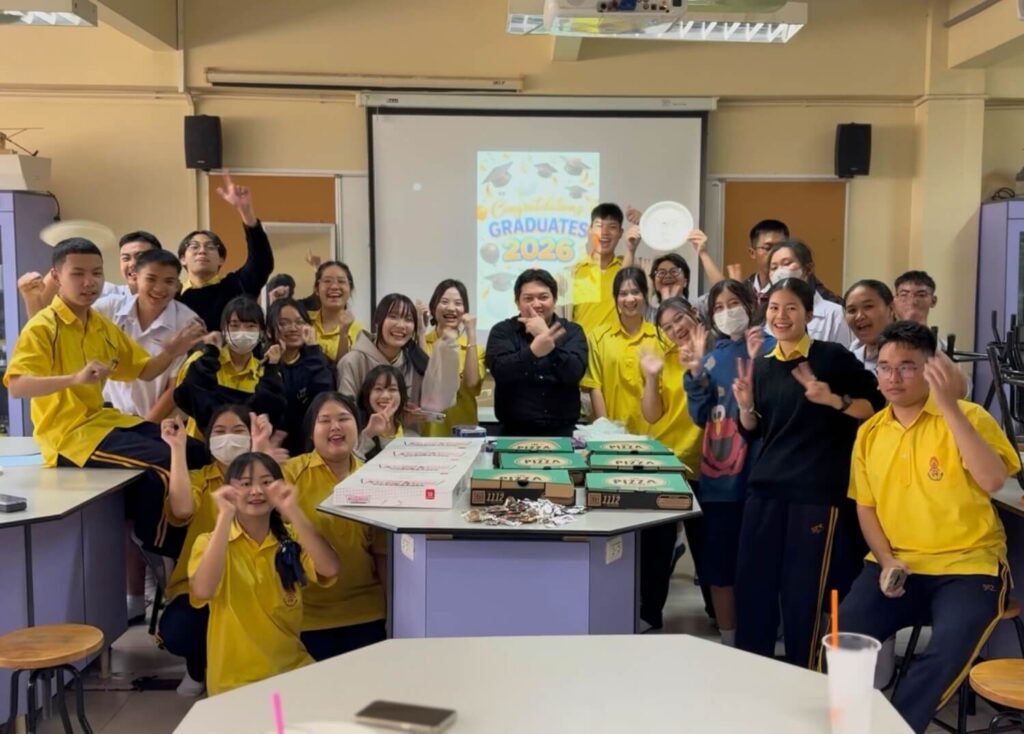
Behind the celebration is a great deal of preparation. Before the actual ceremony takes place, students must attend rehearsal sessions designed to ensure everything runs smoothly.
These rehearsals are taken very seriously. Students learn how to walk across the stage properly, bow respectfully, and receive their diplomas in the correct manner.
On graduation day itself, students arrive early and follow strict schedules. The ceremony can last several hours, and graduates must remain seated patiently while waiting for their moment on stage. The preparation and discipline involved reflect the importance of the occasion.
Formal Attire and Strict Graduation Rules
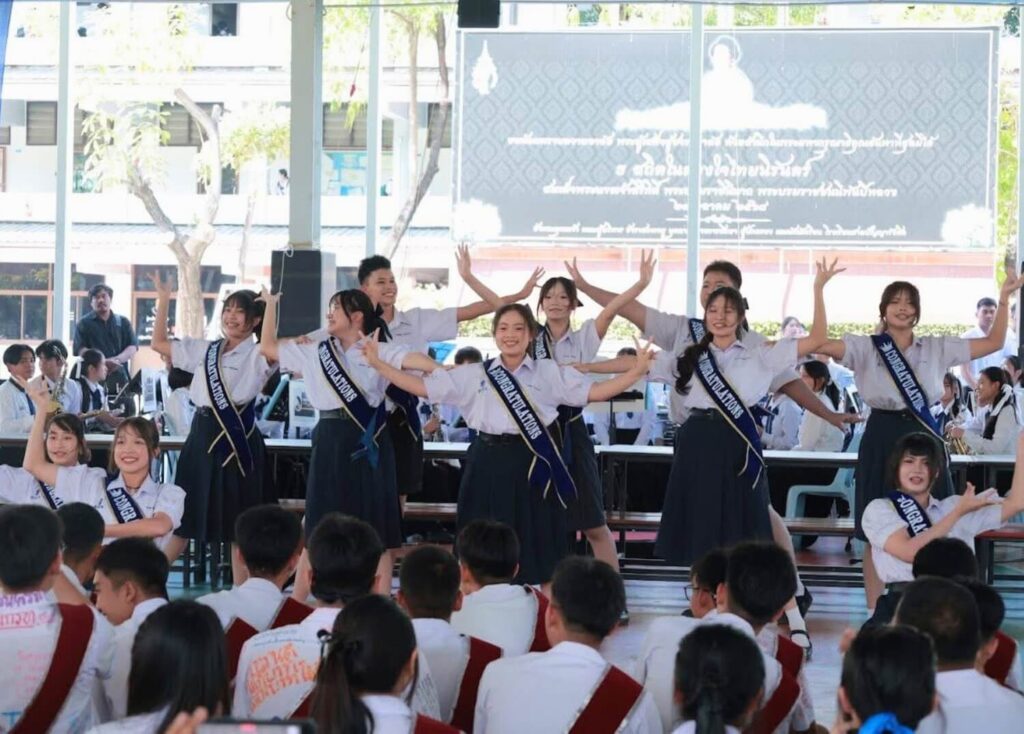
Another distinctive feature of Thai graduation ceremonies is the formal attire. Each school has its own official graduation uniform that students must wear during the ceremony.
Typically, this includes a white shirt, dark trousers or a skirt, and a graduation gown decorated with colors representing the school or academic program. Schools also enforce strict guidelines regarding appearance. Hairstyles must be neat and conservative, while jewelry and accessories are kept minimal.
Female graduates often choose natural and modest makeup, as the ceremony focuses on formality and respect rather than personal style. These details highlight how carefully Thai institutions preserve the dignity of the occasion.
Why Rehearsals Are Taken Seriously

Rehearsals play an essential role in preparing students for the ceremony. Most students attend at least one or two full rehearsal sessions before graduation day.
During these rehearsals, school officials guide students through the exact sequence of events, from seating arrangements to the moment they walk across the stage. Uniforms are also checked carefully to ensure they meet all regulations. Students who arrive late or fail to follow instructions may receive warnings or even risk being disqualified.
Although rehearsals can be tiring, they help create a smooth and well-organized ceremony where everything unfolds with precision.
Graduation Day with Family and Loved Ones

Graduation day itself is filled with emotion and excitement. Many students wake up early in the morning to prepare, and some graduates visit beauty salons for hair and makeup before the ceremony begins.
Families often travel long distances to attend the event. Parents, siblings, grandparents, and close relatives gather to support the graduate and celebrate this important achievement. Before entering the ceremony hall, students usually spend time taking photographs with their families. These photos often feature flowers, congratulatory signs, and joyful smiles.
After the ceremony, many families continue the celebration by sharing a meal. Restaurants near universities become busy during graduation season, and some families even organize larger gatherings at home or in special venues. These celebrations strengthen family bonds and create memories that last a lifetime.
Receiving the Diploma on Stage

Once inside the ceremony hall, students must follow strict rules to maintain the formal atmosphere. Talking, using phones, or leaving without permission is generally not allowed.
Graduates remain seated quietly until their names are called. When their moment arrives, each student walks across the stage, bows respectfully to the official presenting the diploma, and receives it with care before exiting the stage.
For many students in Thailand, this brief moment represents the culmination of years of dedication and hard work.
Photos, Flowers, and Graduation Gifts

Photography is an essential part of Thai graduation celebrations. Throughout graduation season, students take countless photos with friends, classmates, and family members. Many graduates pose in front of well-known school landmarks or statues, while others hire professional photographers to capture high-quality images of the occasion.
Gifts also play an important role in the celebration. Friends and relatives often bring flower bouquets, money envelopes, stuffed animals, jewelry, watches, or balloons to congratulate the graduate. Flower bouquets are especially popular. Graduates often carry several bouquets during photo sessions, symbolizing happiness, success, and the beginning of a new chapter.
Celebrating Friendship and Graduation Memories

Graduation also marks the closing of an important chapter in students’ lives. Many have spent several years studying together, building friendships that extend far beyond the classroom. Friends often exchange small gifts or write messages in graduation cards, expressing gratitude and wishing each other success in the future.
Group photo sessions and outings are also common during graduation season, giving friends time to celebrate their achievements together before they move on to their professional careers. Social media has also become part of the celebration. Graduates share their photos and experiences on platforms such as Instagram and Facebook, allowing relatives and friends who could not attend the ceremony to share in the moment.
Despite the excitement, graduation can also be a stressful time. Between rehearsals, strict rules, and busy schedules, students have a lot to manage. Even so, most families agree that the effort is worthwhile because of the meaning behind the occasion.
Tradition, Culture, and New Beginnings
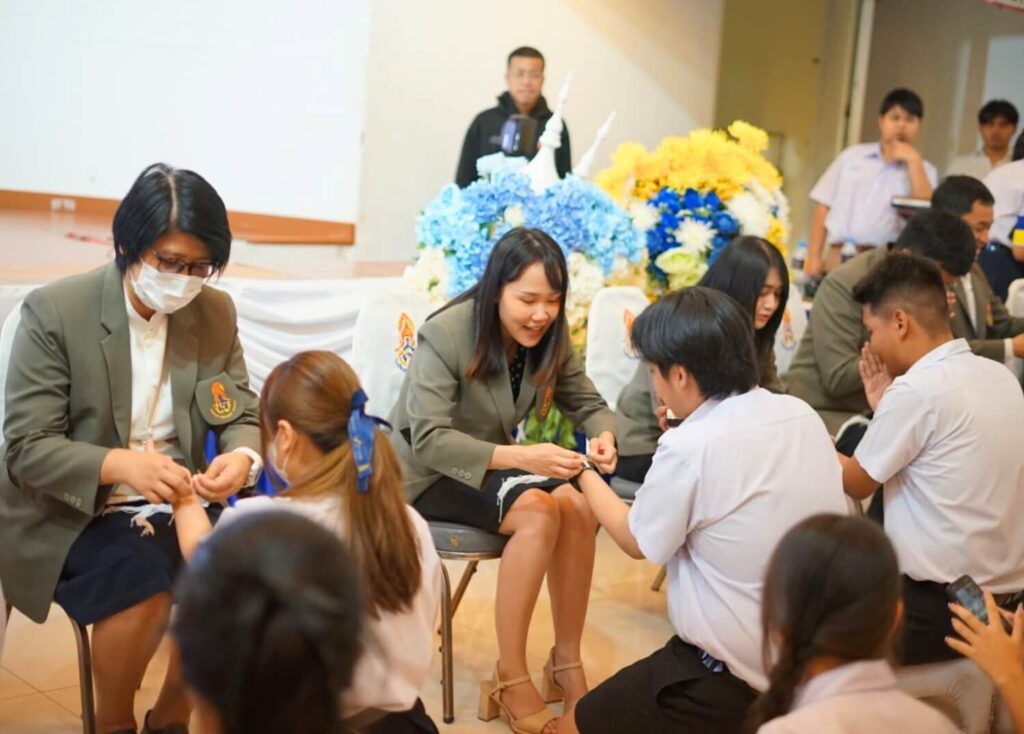
Thai graduation ceremonies reflect important cultural values such as respect, discipline, and gratitude. One tradition sometimes seen during graduation celebrations is the thread-tying ritual influenced by the Thai Bai Sri Su Kwan blessing ceremony, where threads symbolize good fortune and spiritual encouragement.
Throughout the ceremony, respect is demonstrated through formal behavior and proper etiquette. Discipline is reflected in the structured procedures students follow from rehearsals to the final ceremony.
Graduation also represents an important transition. After completing their studies, many students begin their careers or continue pursuing higher education. For graduates, the ceremony marks the beginning of a new stage in life filled with opportunities, responsibilities, and ambitions.
For educators who choose to teach in Thailand, especially at Saipanyarangsit (SPR) School, one of BFITS Partner Schools, witnessing moments like this adds deeper meaning to the experience of teaching abroad. It reminds us that our role goes beyond the classroom. We become part of the journey that helps students reach milestones they—and their families—will remember forever.