The Steam Engine Boat STEM Project is a hands-on science activity that helps students connect density, thermal energy, and states of matter through design, testing, and teamwork. In this supervised classroom project, students build and present a boat that must float, carry weight, and move using a steam-powered setup. It is an engaging way to connect science, engineering, and problem-solving in a real-world context.
📘 Overview
Leadership, teamwork, and creativity are important parts of meaningful classroom learning. In this STEM challenge, students were asked to design and build a steam engine boat, then test how well it could float, carry metal weights, and move during the presentation. The project allowed students to apply science concepts in a practical setting while also developing collaboration, communication, and problem-solving skills.
This activity formed part of a wider science project on density and thermal energy, with links to thermodynamics, states of matter, Archimedes’ principle, and basic engineering design. From planning and construction to testing and presentation, students were encouraged to think critically, troubleshoot problems, and explain the science behind their work.
🎯 Learning Objective
- Students will design and build a boat for a STEM challenge.
- Students will apply ideas related to density, thermal energy, and states of matter.
- Students will explore how structure and materials affect whether a boat can float and carry weight.
- Students will develop teamwork, communication, and presentation skills.
- Students will connect science learning to engineering design and real-world problem-solving.
🧪 Materials
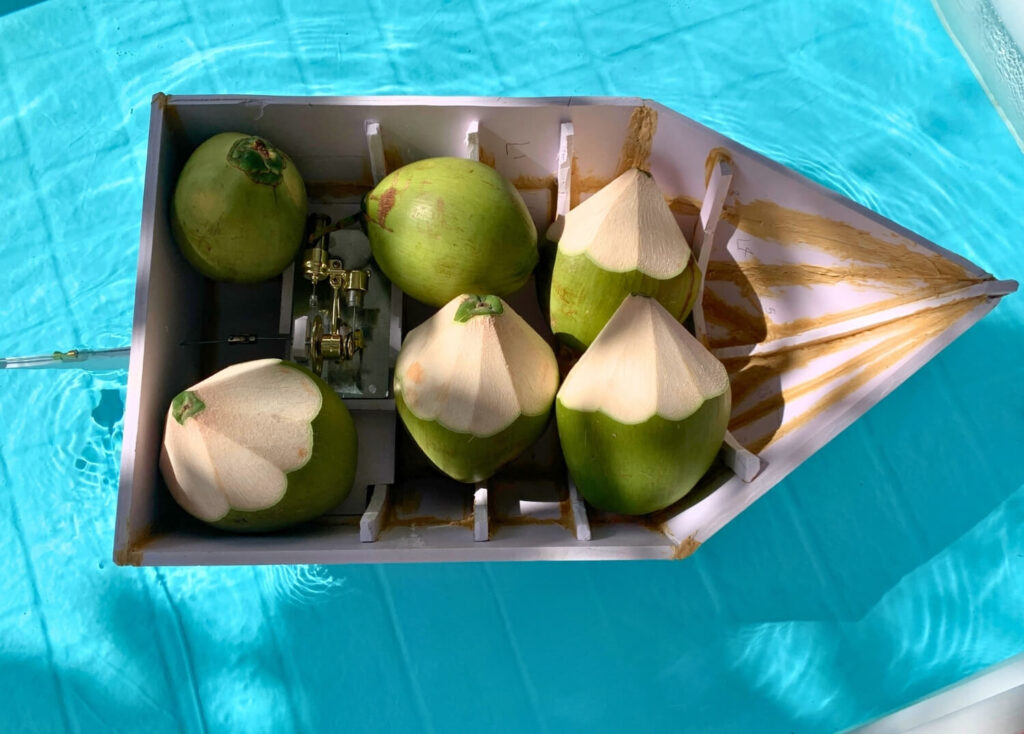
General Project Materials
- Boat-building materials
- Prepared by students. Recyclable materials may be used.
- Prepared by students. Recyclable materials may be used.
- Design tools
- Graphing paper or an appropriate application for planning the boat design.
- Graphing paper or an appropriate application for planning the boat design.
- Testing materials
- Prepared by the teacher for the testing phase.
- Prepared by the teacher for the testing phase.
- Metal weights
- Used to test how much load the boat can carry.
Example Materials from One Student Group
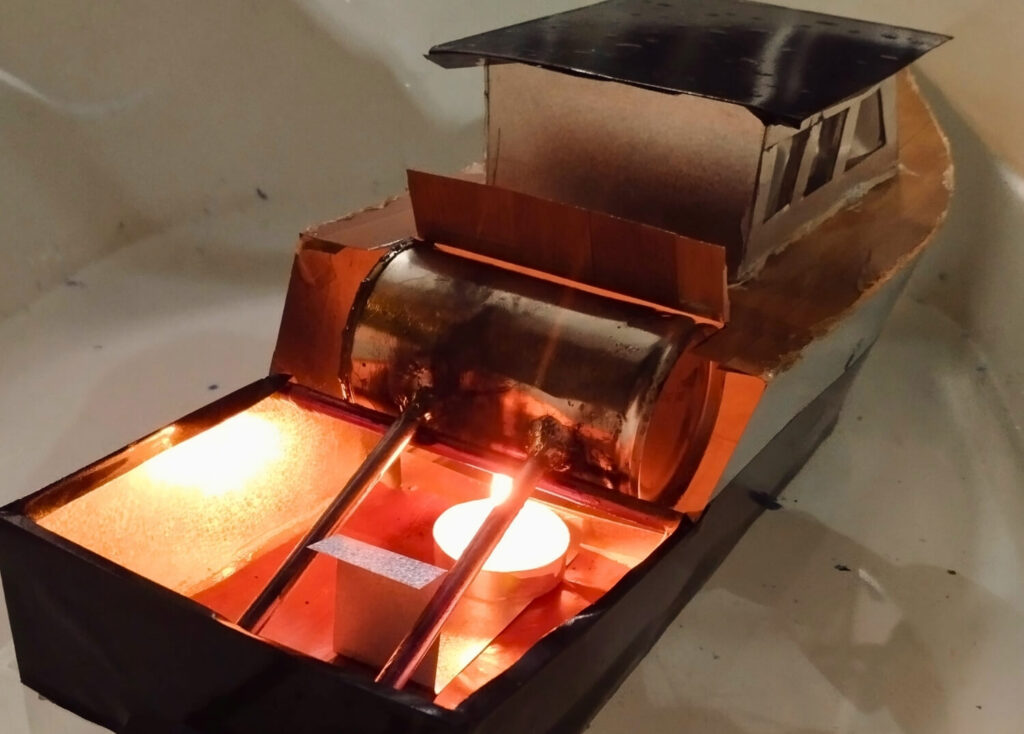
One group reported using:
- a large zinc sheet
- a stainless can
- metal straws
- decorations for the boat
- tools and materials for assembling and testing their design
📝 Procedure
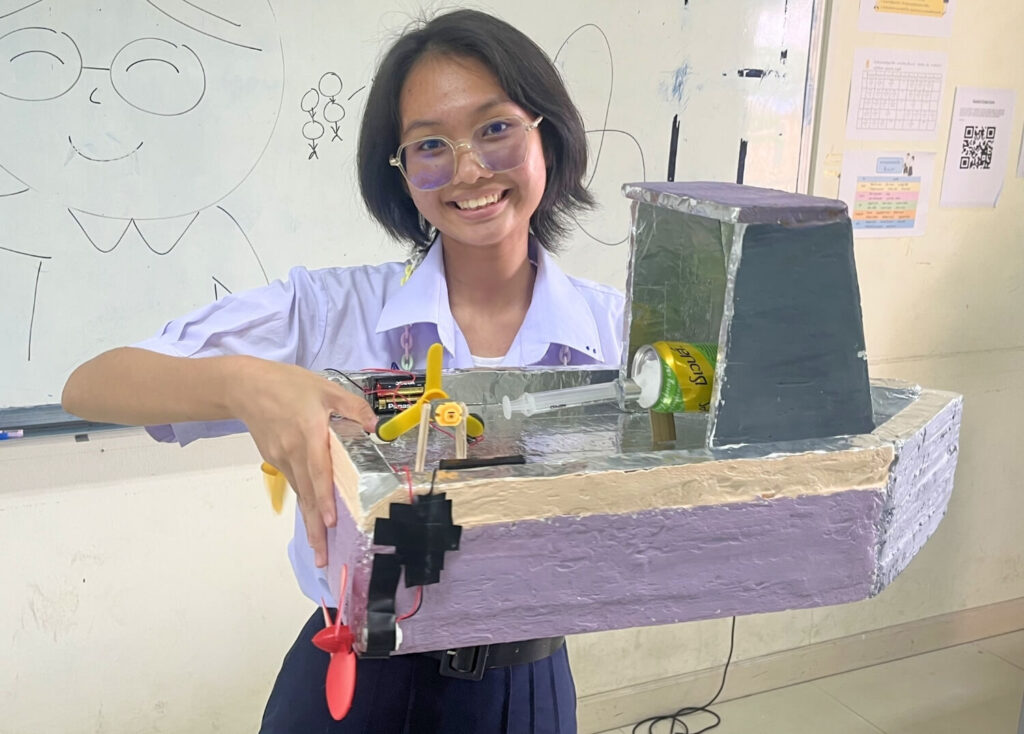
- Divide students into groups of 4–5 members.
- Explain the STEM challenge goals: the boat should float, carry the heaviest metal weights possible, and move during testing.
- Review the building parameters, including the suggested size of 30 cm × 30 cm × 30 cm for each team boat.
- Give students 30 minutes during the pre-lab phase to plan and design their boat using graphing paper or software.
- Have students gather and organize the materials they will use for construction. Recyclable materials may be included.
- During laboratory day, allow students 60 minutes to build, test, and improve their boat design.
- Ask groups to focus on the testing criteria: whether the boat can float, carry the most metal weights, move using the steam-powered setup, and present well visually.
- Encourage students to troubleshoot and improve their design as needed during the activity.
- Have one team member maneuver the boat during testing while the group supports observation and adjustments.
- Ask each group to present the final boat, explain its structure and design, and describe the science concepts involved.
- If needed, provide an extension period so students can complete or improve the project before the final presentation.
👀 Expected Observations
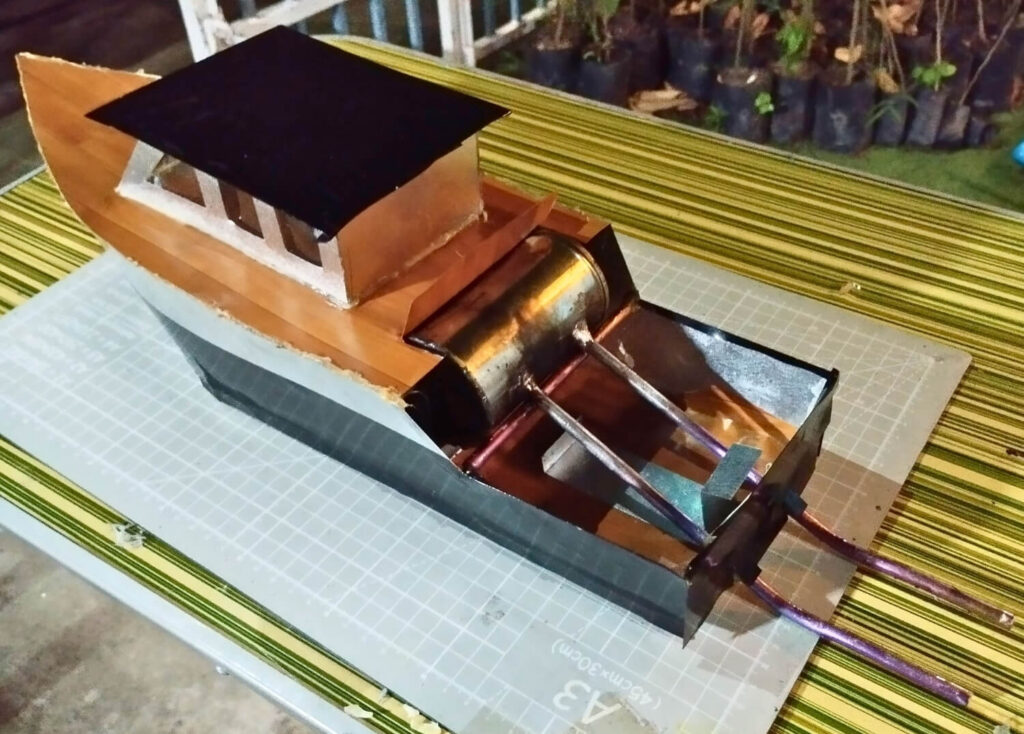
Students may observe:
- Some boats float more effectively than others
- Heavier loads affect stability and buoyancy
- Design choices influence movement and balance
- Teams may need to troubleshoot leaks, structure, or motion
- Heat can cause water to produce steam in the propulsion setup
- The most successful boats combine function, structure, and presentation
- Teamwork and communication strongly affect final performance
🧠 What’s Happening?
This project combines several science and engineering concepts. Density helps explain why some boats float better than others and how much weight they can carry before becoming unstable. Thermal energy is involved in the heating process that supports steam production, and states of matter can be observed as water changes, which helps drive motion in the system.
The project also connects to thermodynamics, fluid mechanics, and Archimedes’ principle. Students are not only building an object, but also testing how design, heat, water, and structure work together. This makes the project a strong example of STEM learning, where science concepts are applied through hands-on problem-solving.
🌟 Learning Outcomes
Students can learn several important concepts and skills through this project:
- Density and Buoyancy
- Students observe how structure and load affect whether a boat floats.
- Students observe how structure and load affect whether a boat floats.
- Thermal Energy
- Students connect heating to movement and energy transfer.
- Students connect heating to movement and energy transfer.
- States of Matter
- Students see how matter changes during the heating process.
- Students see how matter changes during the heating process.
- Engineering Design
- Students apply planning, construction, testing, and improvement.
- Students apply planning, construction, testing, and improvement.
- Problem-Solving and Troubleshooting
- Students adjust their design based on what happens during testing.
- Students adjust their design based on what happens during testing.
- Leadership and Teamwork
- Students collaborate, divide roles, and support their team.
- Students collaborate, divide roles, and support their team.
- Communication Skills
- Students explain their boat design and present their learning in English.
🎓 Classroom Notes
- This works best as a supervised STEM project rather than a simple experiment.
- The project is strong for integrating science, engineering, and communication in one task.
- Students benefit from having time to plan, test, revise, and present.
- The heaviest-load challenge adds a practical way to discuss density and structure.
- This project also builds leadership, camaraderie, and teamwork as students work together to create practical solutions.
💬 Discussion Questions
- What makes one boat float better than another?
- How does density affect the boat’s performance?
- Why is thermal energy important in this project?
- How do states of matter connect to the steam-powered setup?
- What design features helped the boat carry more weight?
- What problems did teams need to troubleshoot?
- How did teamwork affect the final result?
- Why is planning important before building?
- How does this project connect science to real-world engineering?
- What did students learn beyond science content alone?
🚀 Extension / Challenge
- Compare two boat designs and explain which one was more effective.
- Test how changing the shape of the boat affects its floating ability.
- Explore how different recyclable materials affect structure and stability.
- Create a labeled diagram of the final boat design.
- Research Archimedes’ principle and connect it to this project.
- Explain how thermodynamics is involved in the activity.
- Record how much weight each boat can carry and compare results.
- Reflect on how the team improved the design during troubleshooting.
- Design a new version of the project for a different environment or challenge.
- Write a short presentation about how STEM learning helped the group complete the task.
⚠️ Safety Note
This project should be carried out in a controlled classroom or laboratory setting under direct teacher supervision. Any heating elements, sharp tools, metal parts, or testing materials must be managed carefully and only with appropriate safety guidance. Students should follow all classroom safety procedures throughout planning, construction, testing, and presentation.
📂 Media & Resources
For downloadable files and complete teaching resources, visit our Download Center.