The Simple Circuit Lab Activity is a hands-on physics experiment that helps students understand how electricity flows through a complete circuit. In this supervised laboratory activity, students build a basic circuit using a battery, wires, a light bulb, and a switch. It is a practical way to connect electricity concepts to real devices that students see and use every day.
📘 Overview
Electricity powers many parts of modern life, from homes and appliances to communication, healthcare, transportation, education, and entertainment. At the center of these systems is the electrical circuit: a closed loop that allows electrical current to flow from a power source through components and back to the source.
This activity focuses on building a simple electrical circuit so students can apply electricity concepts through practice. By assembling, testing, and troubleshooting the circuit, students learn how a power source, conductors, a load, and a switch work together to control electrical energy.
🎯 Learning Objective
- Students will identify the main components of a simple circuit.
- Students will build a closed circuit using a battery, wires, a light bulb, and a switch.
- Students will explain how current flows through a complete circuit.
- Students will understand the roles of a power source, a conductor, a load, and a switch.
- Students will troubleshoot common circuit problems.
🧪 Materials
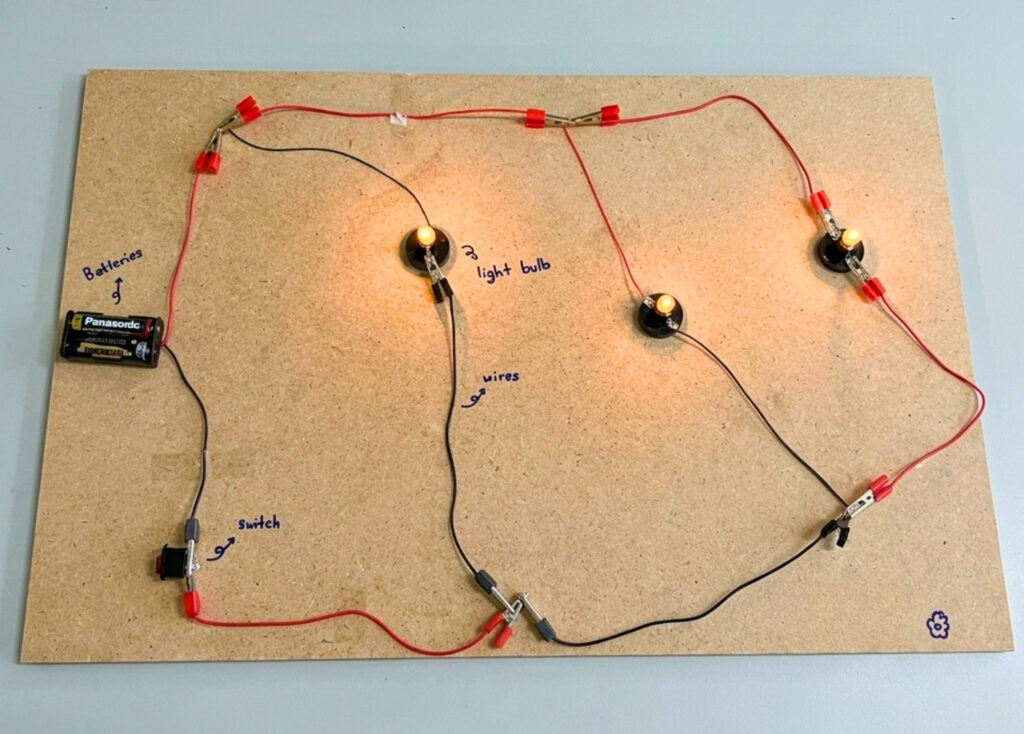
- Battery
- Serves as the power source that provides electrical energy to the circuit.
- Serves as the power source that provides electrical energy to the circuit.
- Two or more wires
- Act as conductors that allow electricity to flow between components.
- Act as conductors that allow electricity to flow between components.
- Light bulb with holder
- Serves as the load that uses electrical energy to produce light.
- Serves as the load that uses electrical energy to produce light.
- Switch
- Controls the flow of electricity by opening or closing the circuit.
- Controls the flow of electricity by opening or closing the circuit.
- Electrical tape or connectors
- Used to secure wire connections.
- Used to secure wire connections.
- Breadboard (optional)
- Can be used to organize the circuit and test connections more easily.
📝 Procedure
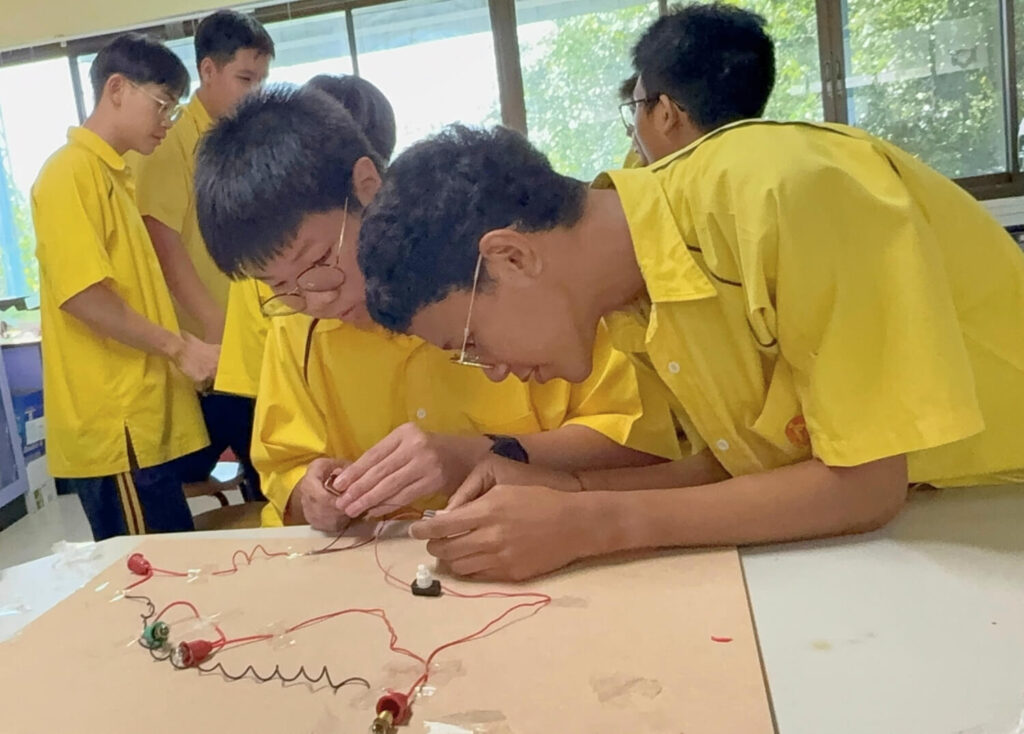
- Gather all materials: battery, wires, light bulb with holder, switch, and any optional support materials.
- Attach one end of a wire to the positive terminal of the battery.
- Secure the connection using tape or connectors if needed.
- Connect the free end of the wire to one terminal of the light bulb holder.
- Use a second wire to connect the other terminal of the light bulb holder to one terminal of the switch.
- Attach another wire from the switch’s second terminal to the battery’s negative terminal.
- Check that all connections are secure and that the circuit forms a complete loop.
- Flip the switch to close the circuit.
- Observe whether the light bulb turns on.
- If the bulb does not light, check the connections, battery, bulb, and wires.
- After testing, turn the switch off and carefully disconnect the circuit if needed.
👀 Expected Observations
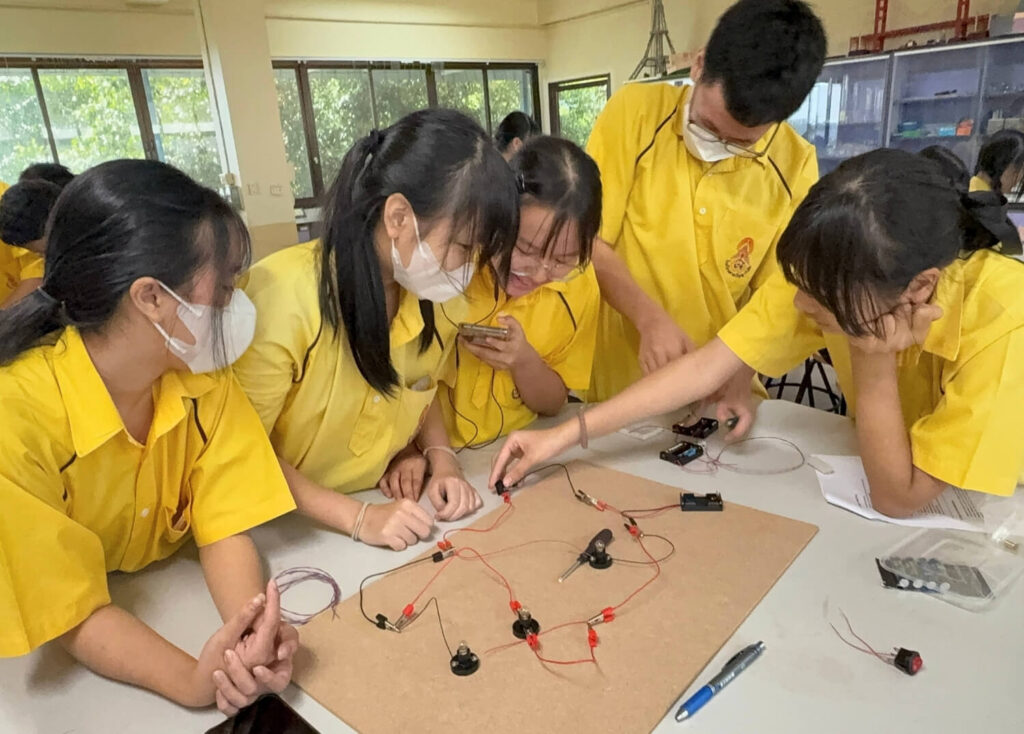
Students may observe:
- The light bulb turns on when the circuit is complete.
- The light bulb turns off when the switch opens the circuit.
- Loose or incomplete connections prevent the bulb from lighting.
- Electricity needs a complete path to flow.
- The switch controls whether current can move through the circuit.
- Troubleshooting helps identify which part of the circuit is not working.
🧠 What’s Happening?
A simple circuit works when electricity has a complete path to follow. The battery provides electrical energy, the wires carry the current, the light bulb uses the energy to produce light, and the switch controls whether the circuit is open or closed. When the switch is closed, current can flow through the loop, and the bulb lights up. When the switch is open, the path is broken, and the bulb turns off.
This activity helps students understand important electricity concepts such as voltage, current, resistance, and the need for a closed loop. It also shows why circuit design matters in everyday technology, from lightbulbs and appliances to computers and electronic devices.
🌟 Learning Outcomes
Students can learn several important concepts and skills through this experiment:
- Electrical Circuits
- Students understand that a circuit must be complete for electricity to flow.
- Students understand that a circuit must be complete for electricity to flow.
- Power Source
- Students learn that the battery provides electrical energy.
- Students learn that the battery provides electrical energy.
- Conductors
- Students see how wires connect components and allow current to move.
- Students see how wires connect components and allow current to move.
- Load
- Students identify the light bulb as the part of the circuit that converts electrical energy into light.
- Students identify the light bulb as the part of the circuit that converts electrical energy into light.
- Switch Control
- Students learn how a switch opens and closes the circuit.
- Students learn how a switch opens and closes the circuit.
- Troubleshooting
- Students practice checking connections, testing components, and solving circuit problems.
🎓 Classroom Notes
- This activity works best as a supervised hands-on electricity lab.
- It is especially effective for introducing closed circuits, current flow, and circuit components.
- The strongest teaching value comes from letting students assemble, test, and troubleshoot the circuit.
- Students can draw a simple circuit diagram before or after building the model.
- This experiment connects electricity lessons to real-world devices and future electronics projects.
💬 Discussion Questions
- What are the main parts of a simple circuit?
- Why does electricity need a complete loop to flow?
- What happens when the switch is open?
- What happens when the switch is closed?
- What role does the battery play in the circuit?
- Why are wires important in the circuit?
- What is the purpose of the light bulb in this activity?
- Why might the bulb not light even if all parts are connected?
- How does troubleshooting help improve the circuit?
- Where can students find circuits in everyday life?
🚀 Extension / Challenge
- Draw a circuit diagram showing the battery, wires, bulb, and switch.
- Add another light bulb and observe how the circuit changes.
- Compare what happens when the switch is placed in different parts of the circuit.
- Test different wire lengths and observe whether the circuit still works.
- Research the difference between series and parallel circuits.
- Identify three household items that use electrical circuits.
- Use a voltmeter to test the battery, if available.
- Design a simple circuit that controls more than one load.
- Explain how simple circuits are connected to larger electronic systems.
- Reflect on why building a circuit helps students understand electricity better than reading about it alone.
⚠️ Safety Note
This experiment should be carried out using only low-voltage classroom materials, such as batteries designed for student activities. Students should never connect classroom circuits to wall outlets or mains electricity. All wires, batteries, bulbs, and switches should be checked before use, and students should work under teacher supervision throughout the activity.
📂 Media & Resources
For downloadable files and complete teaching resources, visit our Download Center.