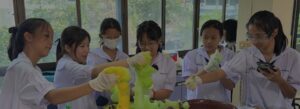
The Pancake Chemistry Experiment is a creative chemistry activity that helps students explore chemical reactions in cooking, especially the Maillard reaction. In this supervised science laboratory-style experiment, students investigate how careful measuring, controlled mixing, and proper heating affect the texture, color, and flavor of pancakes. It is a relatable and enjoyable way to connect chemistry to everyday life.
📘 Overview
Cooking can become a fascinating study of chemistry when it is approached with the same precision and observation used in laboratory work. Pancakes provide an excellent subject for exploring how ingredients interact, how heat changes food, and how careful control of variables can improve results.
This activity focuses on the chemistry behind pancake-making, especially the Maillard reaction, which is responsible for the browning and flavor development that occurs when food is heated. Students also explore the role of precise measurement, gluten development, resting time, and cooking temperature in creating pancakes with the right texture and appearance.
🎯 Learning Objective
- Students will observe how chemical and physical changes occur during cooking.
- Students will understand the importance of accurate measurement in a classroom lab setting.
- Students will explore how mixing affects gluten development and final texture.
- Students will identify the role of heat in browning and flavor development.
- Students will explain how the Maillard reaction contributes to the appearance and taste of pancakes.
🧪 Materials
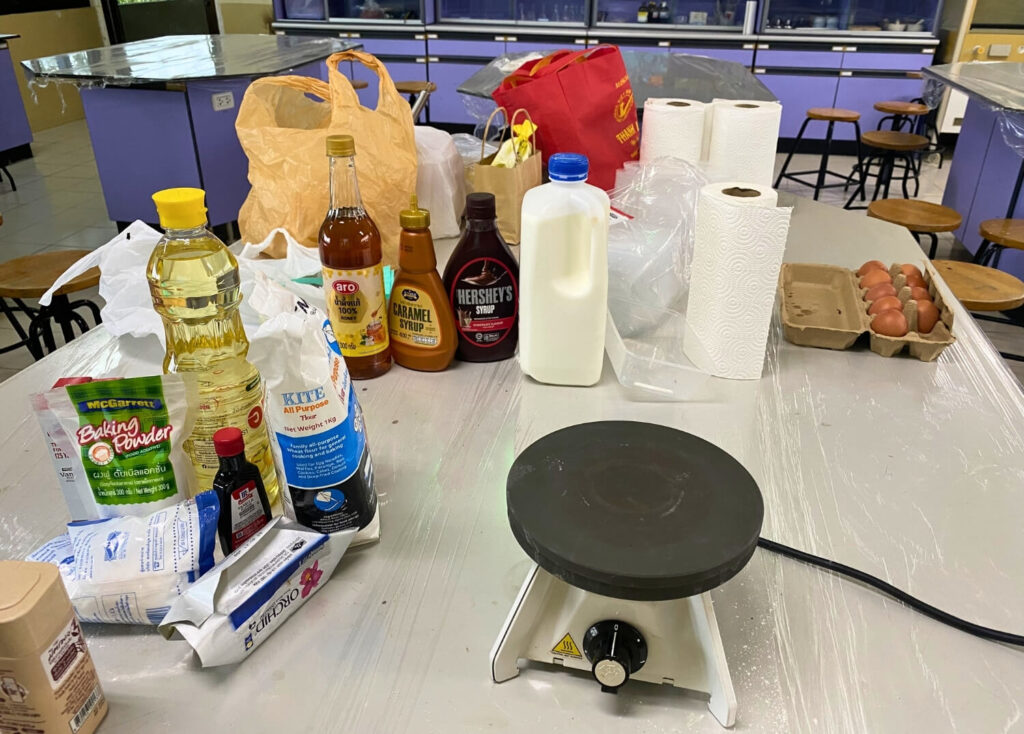
- All-purpose flour
- Provides structure because of its gluten content.
- Provides structure because of its gluten content.
- Baking powder
- Helps the pancakes rise and become fluffy.
- Helps the pancakes rise and become fluffy.
- Salt
- Adds balance to the flavor.
- Adds balance to the flavor.
- Sugar
- Adds sweetness and contributes to browning during cooking.
- Adds sweetness and contributes to browning during cooking.
- Egg
- Contributes to binding and leavening.
- Contributes to binding and leavening.
- Milk
- Adds moisture to the batter.
- Adds moisture to the batter.
- Butter or oil
- Adds richness and is used for mixing and greasing the pan.
- Adds richness and is used for mixing and greasing the pan.
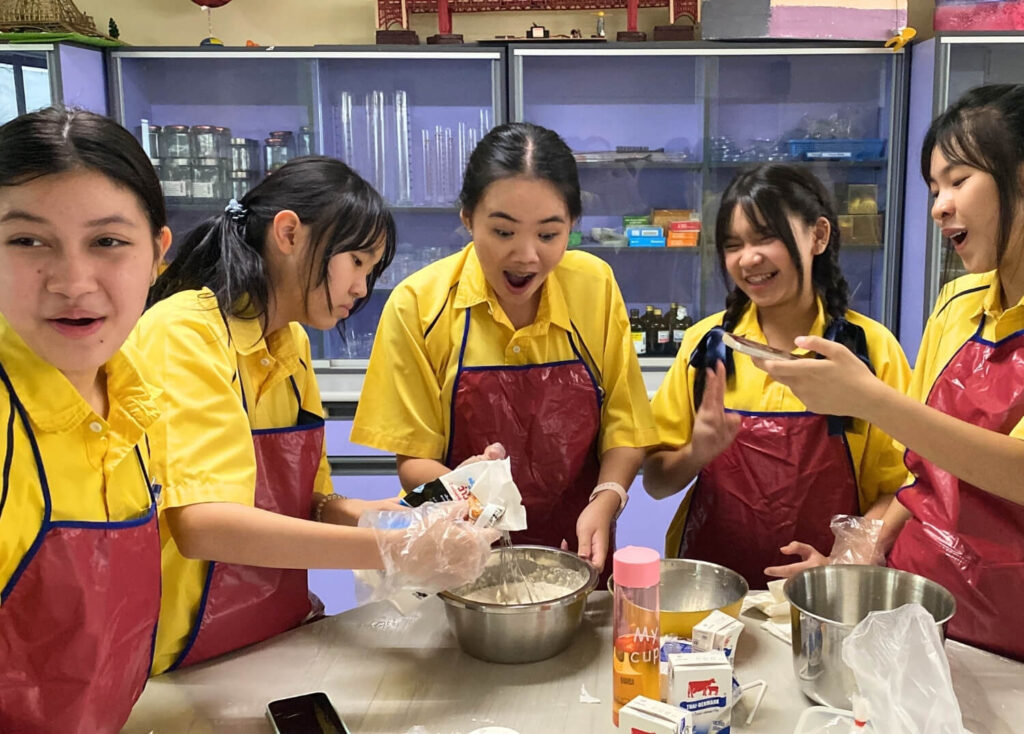
- Mixing bowls
- One for dry ingredients and one for wet ingredients.
- One for dry ingredients and one for wet ingredients.
- Whisk, fork, spatula, or wooden spoon
- Used for mixing ingredients.
- Used for mixing ingredients.
- Measuring cups or a kitchen scale
- Used to ensure accurate measurement of ingredients.
- Used to ensure accurate measurement of ingredients.
- Non-stick skillet or griddle
- Used to cook the pancakes.
- Used to cook the pancakes.
- Ladle or measuring cup
- Used to portion the batter evenly.
Example Small-batch Quantities
- 1 cup flour
- 2 tablespoons sugar
- 2 teaspoons baking powder
- a pinch of salt
- 1 large egg
- ¾ cup milk
📝 Procedure
- Gather all the necessary ingredients before starting.
- Measure the ingredients carefully using measuring cups or, ideally, a kitchen scale for greater precision.
- Sift the flour, baking powder, sugar, and salt into a large mixing bowl. This helps combine the ingredients evenly and aerates the flour.
- In a separate bowl, crack the egg and whisk it until slightly frothy.
- Add the milk and melted butter or oil to the egg mixture and mix until well combined.
- Create a well in the center of the dry ingredients and pour in the wet mixture.
- Gently fold the wet and dry ingredients together using a spatula or wooden spoon. Mix only until combined; a few small lumps are acceptable. Overmixing can make the pancakes dense and tough.
- Allow the batter to rest for about 5–10 minutes. This helps the gluten relax and gives the baking powder time to begin forming bubbles.
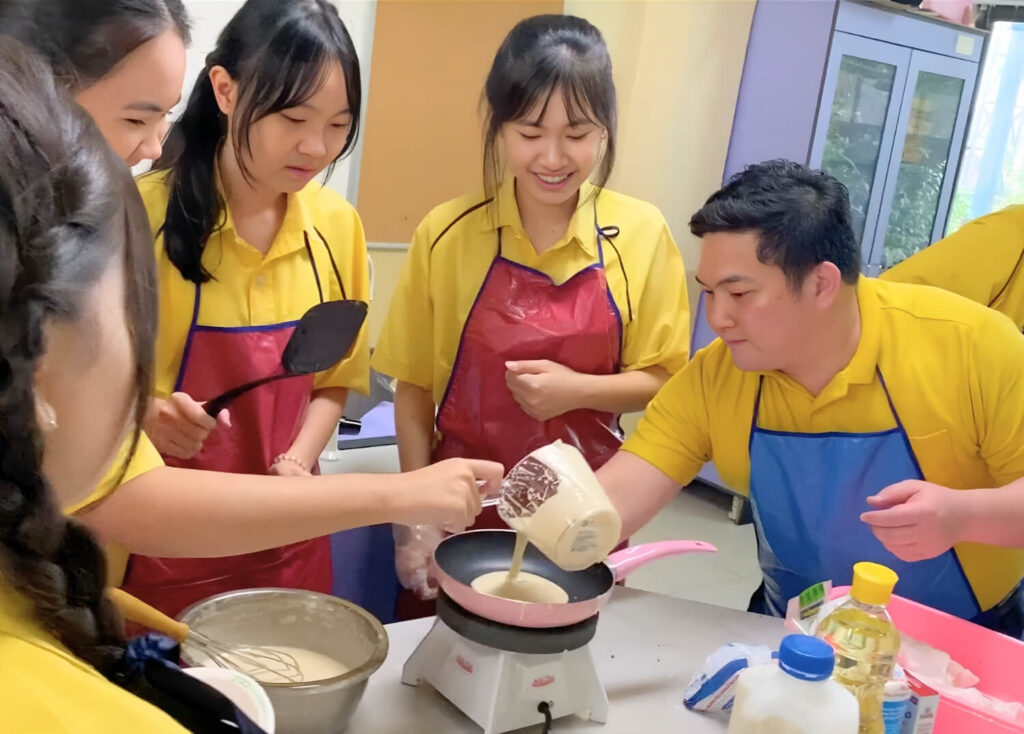
- While the batter is resting, preheat a non-stick skillet or griddle over medium to medium-low heat. Lightly grease the surface with butter or oil.
- Scoop about ¼ cup of batter onto the pan for each pancake. Cook until bubbles form and begin to burst on the surface, and the edges look set.
- Carefully flip the pancake and cook the other side until golden brown.
- Adjust the temperature as needed, so the pancakes cook evenly without burning.
- Transfer the pancakes to a warm plate and serve with toppings such as butter, maple syrup, or fruit.
👀 Expected Observations

Students may observe:
- A smooth but slightly lumpy batter before cooking
- Bubbles forming on the surface as the pancake cooks
- Pancakes rising and becoming fluffy
- A golden-brown surface developing during heating
- Changes in texture from liquid batter to a soft-cooked pancake
- A richer aroma and flavor as browning takes place
- Differences in texture if the batter is overmixed or undermixed
🧠 What’s Happening?
Several important chemical and physical processes take place during pancake-making. First, accurate measurement helps keep the ingredient ratios consistent, which is important when comparing results and improving the recipe through repeated trials.
Second, mixing affects gluten development. Flour contains proteins that form gluten when combined with liquid and mixed. Too much mixing can create excessive gluten, leading to chewy or tough pancakes, while gentle mixing helps produce a softer, airier texture.
Finally, the Maillard reaction occurs when amino acids and reducing sugars react under heat. This reaction is responsible for the golden-brown color and many of the complex flavors that develop as pancakes cook. The source explains that this reaction typically begins at temperatures above 140°C (284°F) and leads to the formation of flavorful compounds and brown pigments known as melanoidins. It also distinguishes the Maillard reaction from caramelization, which involves sugars alone under high heat.
🌟 Learning Outcomes
Students can learn several important chemistry concepts through this experiment:
- Precision in Measurement
- Students understand how accurate measurement affects consistency, texture, and repeatability.
- Students understand how accurate measurement affects consistency, texture, and repeatability.
- Controlled Variables in Experimentation
- Students see how changing ingredient amounts or ratios can affect the final result.
- Students see how changing ingredient amounts or ratios can affect the final result.
- Gluten Development
- Students learn how mixing influences batter structure and pancake texture.
- Students learn how mixing influences batter structure and pancake texture.
- Heat and Browning Reactions
- Students observe how heat changes both the appearance and flavor of food.
- Students observe how heat changes both the appearance and flavor of food.
- The Maillard Reaction
- Students explore how amino acids and sugars react during cooking to create color and complex flavor compounds.
- Students explore how amino acids and sugars react during cooking to create color and complex flavor compounds.
- Scientific Observation in Everyday Life
- Students connect chemistry concepts to a familiar food and see that science is part of ordinary experiences.
🎓 Classroom Notes
- This experiment works very well as a supervised student laboratory-style activity.
- It is especially effective for making chemistry more relatable to students through food science.
- The strongest teaching value comes from combining precise measurement, careful observation, and discussion of the science behind the results.
- Students can compare different mixing times, ingredient ratios, or cooking temperatures as extensions.
- This activity fits naturally in lessons on chemical reactions, food science, heat, and everyday chemistry.
💬 Discussion Questions
- Why is accurate measurement important in this experiment?
- What role does flour play in pancake structure?
- How does overmixing affect the final texture of pancakes?
- Why is resting the batter helpful?
- What signs show that the pancakes are ready to flip?
- Why do pancakes turn golden brown as they cook?
- What is the Maillard reaction?
- How is the Maillard reaction different from caramelization?
- How does cooking temperature affect the outcome?
- Why is pancake-making a good example of chemistry in everyday life?
🚀 Extension / Challenge
- Compare pancakes made with different mixing times.
- Test what happens when the batter is not rested.
- Change the amount of sugar slightly and observe the effect on browning.
- Compare pancakes cooked at different temperatures.
- Research another food where the Maillard reaction occurs.
- Create a chart comparing physical and chemical changes in this experiment.
- Explain how baking powder contributes to fluffiness.
- Compare the Maillard reaction and caramelization with examples.
- Design a mini-investigation using one controlled variable in the recipe.
- Reflect on how cooking can be both a science and an art.
⚠️ Safety Note
This experiment uses hot equipment and heated surfaces, so it should be carried out in a controlled classroom or kitchen-lab setting under teacher supervision. Students should handle hot pans, griddles, and utensils carefully, follow hygiene practices, and avoid contact with hot oil, butter, or cooking surfaces.
📂 Media & Resources
For downloadable files and complete teaching resources, visit our Download Center.