The Fish Dissection Lab Activity is a hands-on biology experiment that helps students study external features, internal organs, and the relationship between structure and function in living organisms. In this supervised science laboratory activity, students examine a fish closely, identify major body parts, and connect what they observe to real biological systems. It is an effective way to make anatomy more visible, practical, and memorable in the classroom.
📘 Overview
Science is often learned best when students are given the chance to discover, perform, and apply scientific methods directly in class. In this dissection laboratory activity, pre-lab preparation plays an important role by helping students understand the objectives, the materials they will use, the safety rules they must follow, and what they are expected to observe and learn. Before the activity, students are also given a safety laboratory form so that expectations, precautions, and responsibilities are clear to both students and parents, especially when sharp tools are involved.
This fish dissection activity focuses on examining both the external anatomy and the internal organ systems of a fish. Students begin by studying visible features such as the scales, fins, eyes, gills, and lateral line, then proceed to identify major internal organs, including the heart, liver, stomach, intestines, swim bladder, and gonads. Through this process, students gain a clearer understanding of animal structure, biological organization, and the value of careful laboratory work.
🎯 Learning Objective
- Students will identify the major external features of a fish.
- Students will locate and identify the major internal organs of a fish.
- Students will understand how body structures support the fish’s survival and movement.
- Students will develop careful observation and laboratory dissection skills.
- Students will follow proper laboratory safety, cleanup, and specimen-handling procedures.
🧪 Materials
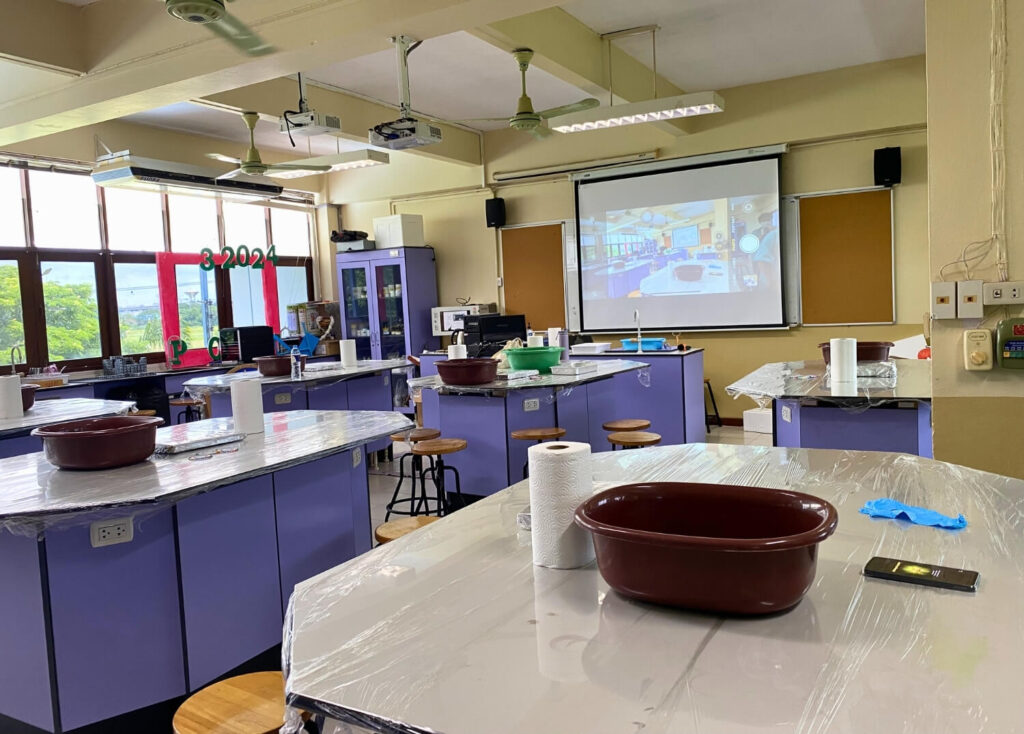
- Dissection tray
- Used to hold the fish securely during observation and dissection.
- Used to hold the fish securely during observation and dissection.
- Dissection pins
- Used to secure the specimen and pin back flaps during the activity.
- Used to secure the specimen and pin back flaps during the activity.
- Scissors
- Used for careful cutting during the dissection.
- Used for careful cutting during the dissection.
- Scalpel
- Used for precise cutting.
- Used for precise cutting.
- Forceps
- Used to lift or separate structures carefully.
- Used to lift or separate structures carefully.
- Dissection probe
- Used to point to and inspect anatomical structures.
- Used to point to and inspect anatomical structures.
- Gloves
- Used to protect the hands during the activity.
- Used to protect the hands during the activity.
- Safety goggles / eye protection
- Used for safety during the laboratory activity.
- Used for safety during the laboratory activity.
- Lab gown
- Worn during the dissection activity as part of the safety procedure.
- Worn during the dissection activity as part of the safety procedure.
- Mask
- Used during the laboratory session.
- Used during the laboratory session.
- Fish specimen
- The organism used for external and internal anatomical study.
- The organism used for external and internal anatomical study.
- Dissection guide or anatomy chart
- Used to support organ identification and comparison during the activity.
📝 Procedure
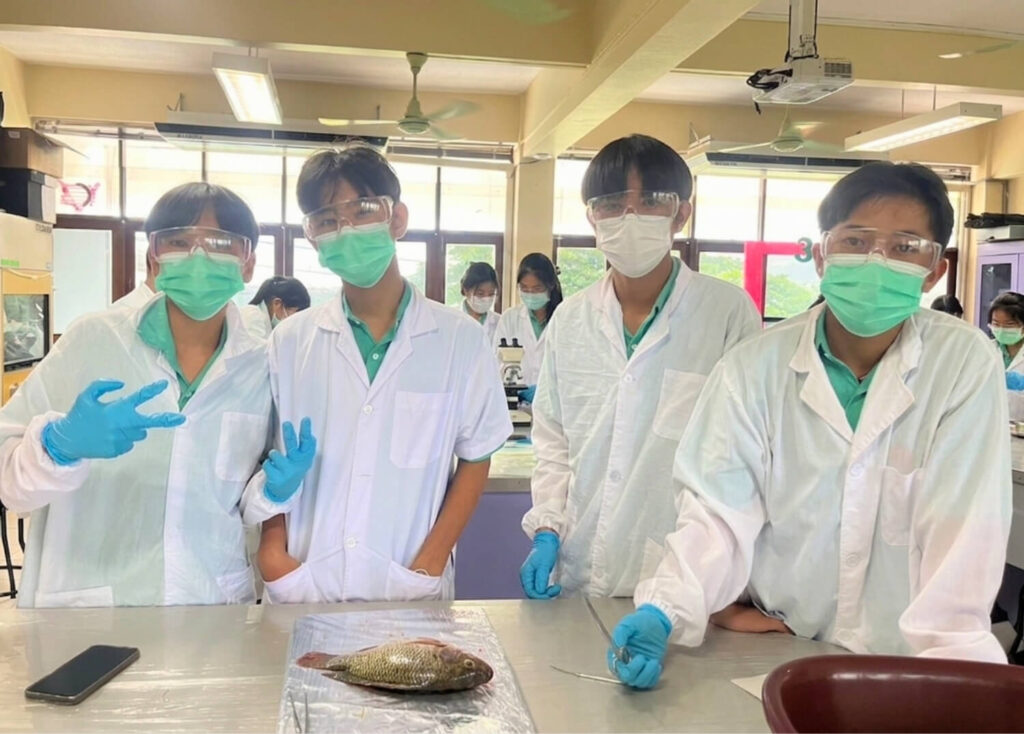
- Begin with a short pre-lab discussion, so students understand the objectives, safety rules, required materials, and what they are expected to observe.
- Review the safety laboratory form and remind students of their responsibilities before the activity begins.
- Put on gloves, safety goggles, a lab gown, and other required protective equipment.
- Make sure the workspace is clean, organized, and well-lit.
- Place the fish on its side in the dissection tray.
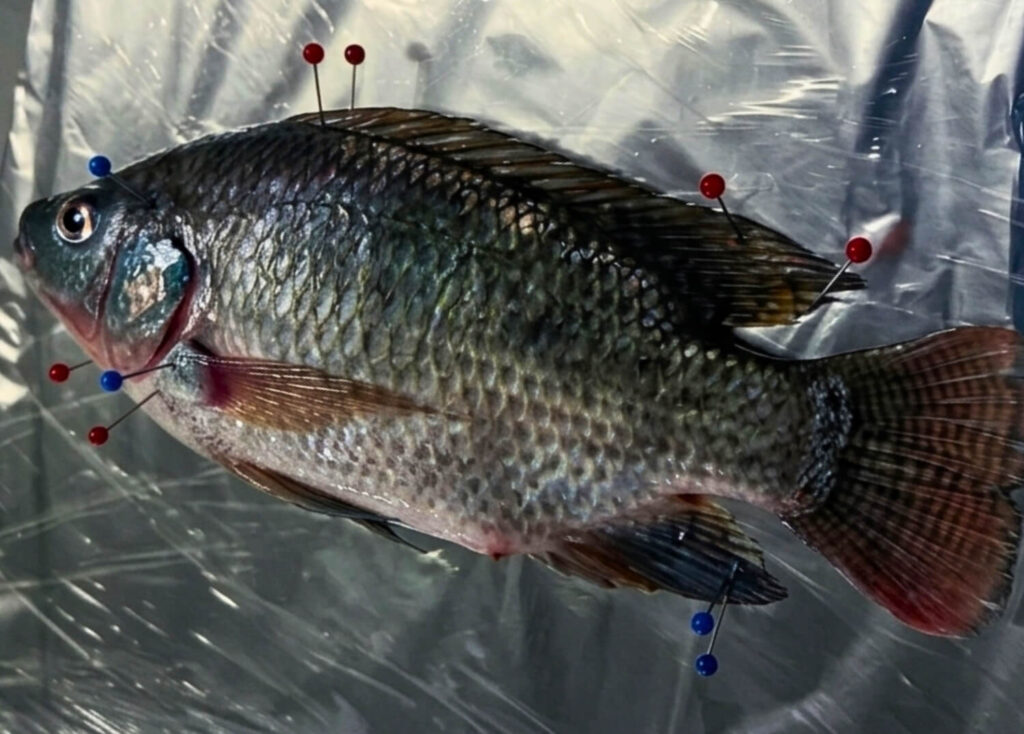
- Use dissection pins to secure the fins and tail so the specimen does not move.
- Observe the fish’s external features, including the scales, fins, eyes, gills, and lateral line.
- Identify the dorsal fin, pectoral fins, pelvic fins, anal fin, and caudal fin.
- Lift the operculum, or gill cover, to expose the gills and observe the gill arches and filaments.
- Make the first incision near the base of the pectoral fin and extend it toward the tail along the ventral side of the fish. Carefully cut through the skin and muscle layers.
- Make additional lateral cuts and pin the flaps back to expose the body cavity.
- Locate and identify the major internal organs, including the heart, liver, stomach, intestines, swim bladder, and gonads. Use an anatomy chart or guide for reference.
- Examine the heart near the head behind the gills and observe its structure.
- Trace the digestive system from the mouth through the esophagus, stomach, intestines, and anus.
- Observe the swim bladder beneath the backbone and note its size and structure.
- Examine the reproductive system and identify the testes or ovaries when visible.
- Record final observations, note any unusual findings, and compare results with the anatomical guide.
- Properly dispose of the specimen and any biological waste according to institutional guidelines, then clean and disinfect all tools and the workspace.
👀 Expected Observations
Students may observe:
- Visible external structures such as scales, fins, eyes, gills, and the lateral line
- Different fin types with different positions and functions
- Gill arches and filaments beneath the operculum
- A small heart located near the head behind the gills
- Internal organs such as the liver, stomach, intestines, swim bladder, and gonads
- A shiny, air-filled swim bladder beneath the backbone
- Differences in reproductive organs depending on whether the fish is male or female
- Variation in organ size, placement, or stomach contents between specimens
🧠 What’s Happening?
This activity gives students a direct way to study how the body of a fish is organized. The external anatomy helps students understand how a fish moves, senses its environment, breathes, and survives in water. Features such as fins, scales, gills, and the lateral line are not just body parts to name, but structures with specific biological functions.
The internal anatomy helps students see how organ systems work together. The heart supports circulation, the digestive organs process food, the gonads are part of reproduction, and the swim bladder helps the fish manage buoyancy. By observing these systems directly, students gain a clearer understanding of anatomy than they would from diagrams alone. The activity also builds scientific habits such as careful handling, guided observation, and evidence-based identification.
🌟 Learning Outcomes
Students can learn several important concepts and skills through this experiment:
- External Anatomy
- Students identify visible fish structures and relate them to movement, protection, and sensing.
- Students identify visible fish structures and relate them to movement, protection, and sensing.
- Internal Anatomy
- Students locate major organs and understand their roles in basic life processes.
- Students locate major organs and understand their roles in basic life processes.
- Structure and Function
- Students connect body parts to the jobs they perform in the organism.
- Students connect body parts to the jobs they perform in the organism.
- Scientific Observation
- Students practice close observation, comparison, and anatomical identification.
- Students practice close observation, comparison, and anatomical identification.
- Laboratory Dissection Skills
- Students develop confidence in handling tools and following step-by-step procedures responsibly.
- Students develop confidence in handling tools and following step-by-step procedures responsibly.
- Safety and Responsibility
- Students learn the importance of preparation, protective equipment, proper disposal, and cleanup.
🎓 Classroom Notes
- This activity works best as a supervised biology laboratory dissection.
- Pre-lab preparation is important so students understand the objectives, tools, and safety expectations before beginning.
- The strongest teaching value comes from combining observation, identification, and guided explanation.
- Students benefit from having an anatomy chart or guide available throughout the activity.
- Cleanup and responsible handling of tools and specimens should be treated as an important part of the learning process.
💬 Discussion Questions
- What external features of the fish were easiest to identify?
- What is the function of the gills?
- Why is the lateral line important for a fish?
- How do the different fins help the fish survive and move?
- Where was the heart located, and why is its position important?
- What is the function of the swim bladder?
- How does the digestive system of the fish compare to what students expected?
- What differences might appear between male and female reproductive organs?
- Why is an anatomy guide useful during dissection?
- What did this activity help students understand that a textbook image alone might not show?
🚀 Extension / Challenge
- Label a full fish anatomy diagram using observations from the lab.
- Compare fish anatomy with another vertebrate studied in class.
- Research how the swim bladder helps a fish maintain buoyancy.
- Write a short explanation of how gills support life in water.
- Compare the roles of the different fins.
- Create a chart of external and internal structures observed during the dissection.
- Explain how form and function are connected in the fish’s body.
- Reflect on what students learned from direct observation versus diagrams.
- Compare the digestive system of a fish with that of another animal.
- Summarize the most important biological structures identified in the activity.
🧾 Specimen Note
The specimen used in this laboratory activity was prepared for supervised classroom study. Students handled it respectfully and followed proper laboratory safety, hygiene, and disposal procedures throughout the activity.
⚠️ Safety Note
Before the laboratory activity, students should complete and return the safety contract with parent or guardian acknowledgment. During the activity, students must act responsibly, follow all teacher instructions, wear proper protective equipment, keep the workspace clean, and handle preserved specimens respectfully.
Students should never work alone, never eat or drink in the laboratory, know the location of safety and first aid equipment, report emergencies immediately, and use sharp tools such as scalpels and scissors only under direct teacher supervision.
📂 Media & Resources
For downloadable files and complete teaching resources, visit our Download Center.